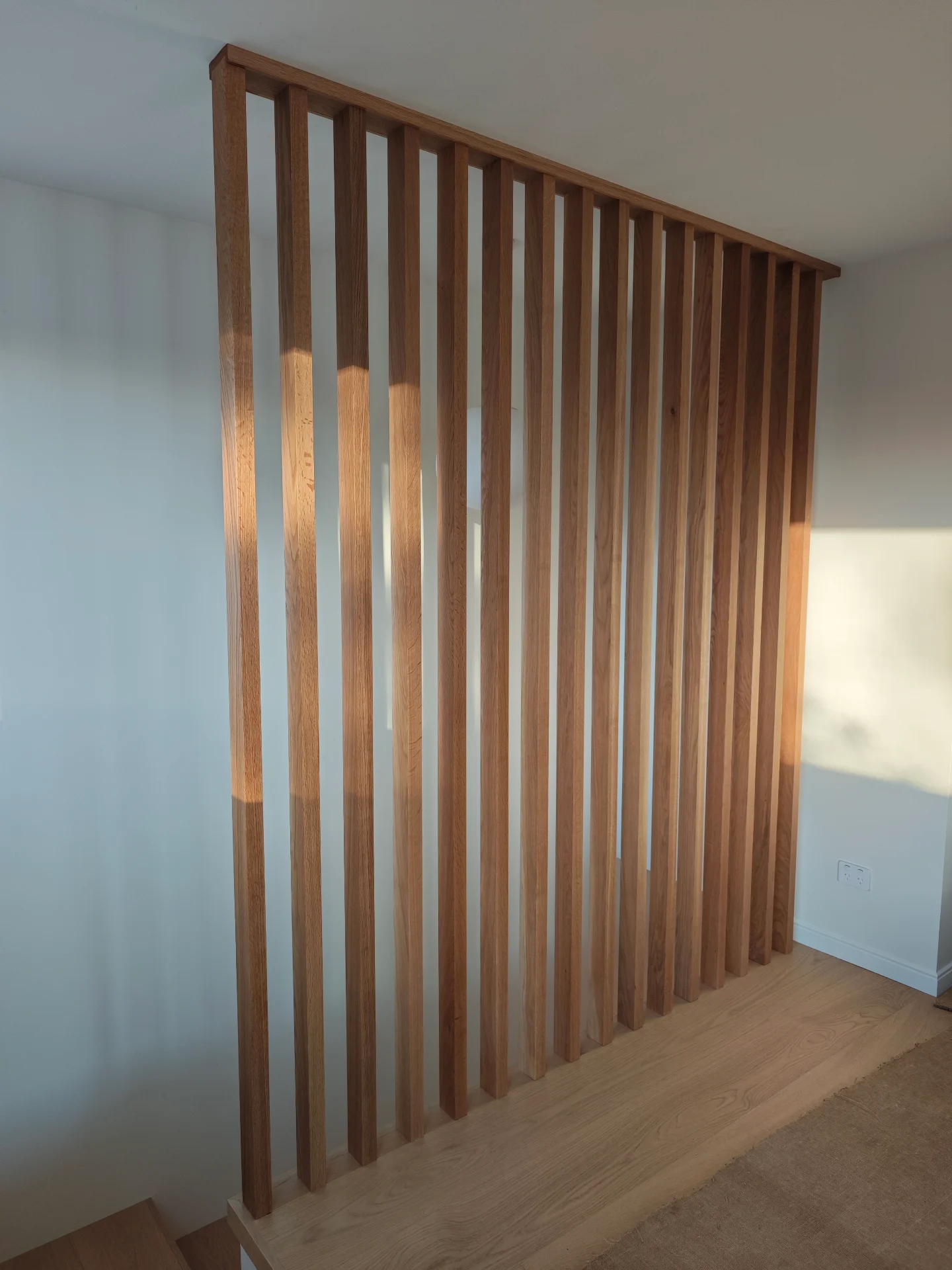
The best timber screens do a quiet job. They divide a space without shutting it down, add rhythm without clutter, and let light keep moving through the room. That is exactly what stands out in this project: a custom oak timber screen on Vermont Street, Ponsonby, built as a vertical slat divider around an upper landing and stair opening.
The project gallery for Oak Screen, Vermont Street, Ponsonby is compact, but useful. It shows the screen close up, then from the landing and living space, so you can see the practical decisions behind the finished look: spacing, alignment, timber tone and how the screen relates to the surrounding walls, floor and stairwell.
A custom oak timber screen for a Ponsonby interior
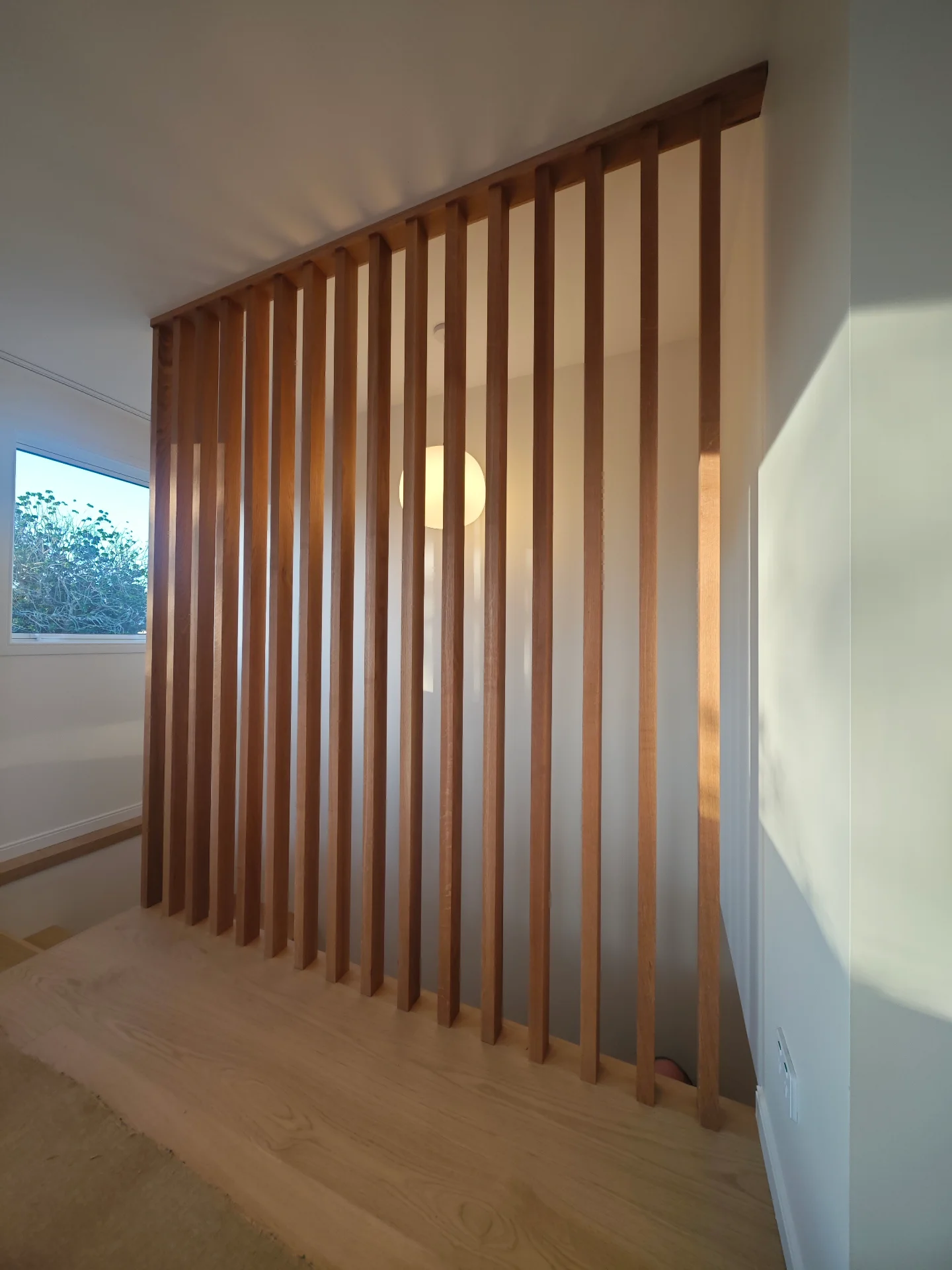
A vertical slat screen is often a better answer than a solid wall when a room needs separation but not a hard visual stop. In this Ponsonby project, the oak screen creates a clear edge beside the stair and landing, while still letting daylight, pendant light and sightlines pass through.
That balance matters. If the screen were too heavy, it would make the landing feel boxed in. If it were too light, it might look decorative rather than properly integrated. The oak slats give the space structure, but the gaps keep the room open.
Why spacing matters on a timber screen
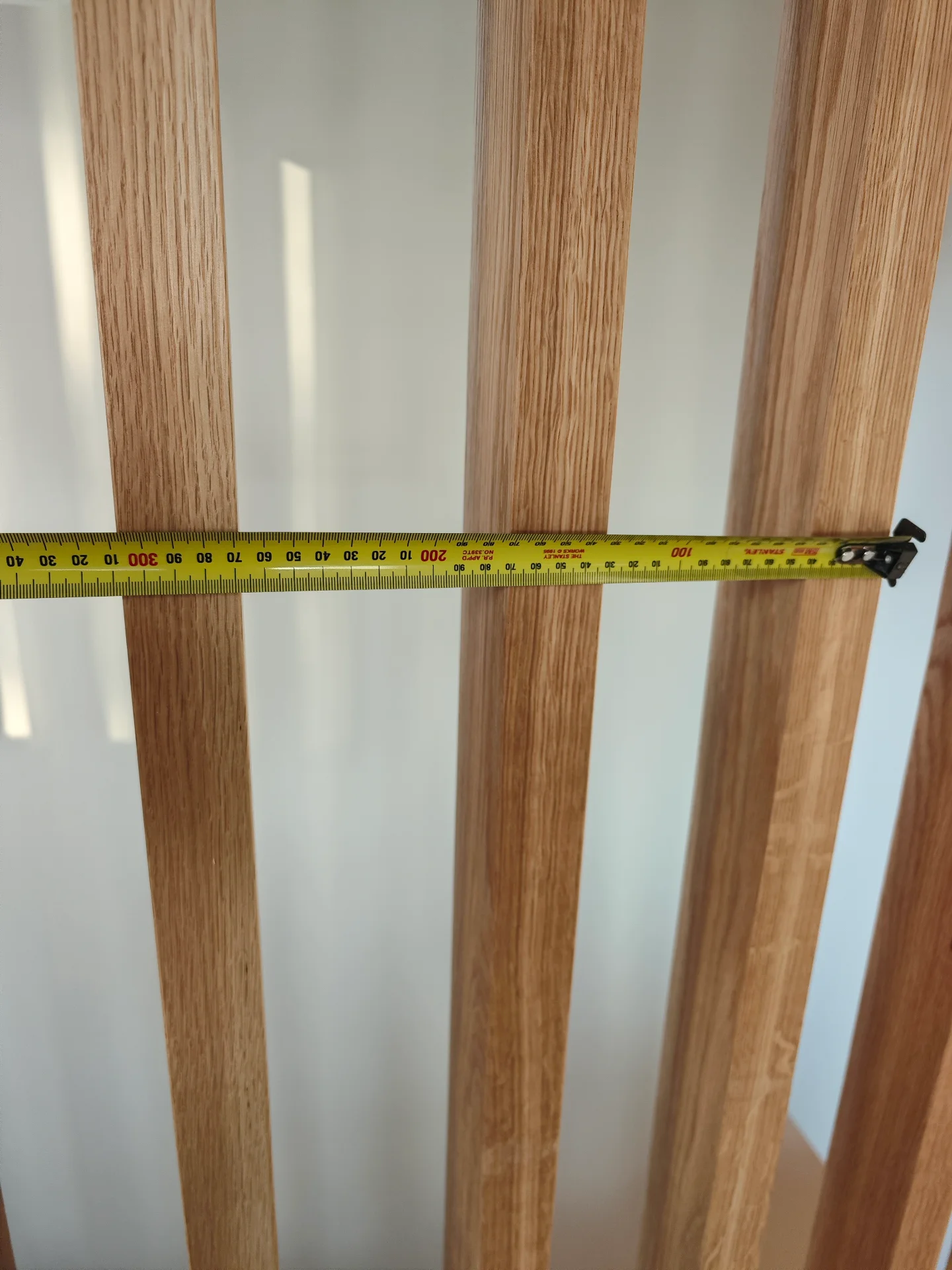
The first photo tells a lot of the story. A tape measure is stretched across the oak slats, checking the rhythm from piece to piece. For a simple-looking screen, this is the sort of detail that makes or breaks the result.
Even spacing helps the screen feel intentional. It keeps the vertical lines calm, avoids awkward gaps near the ends, and makes the timber look like part of the architecture rather than something added afterwards. With oak, the grain also brings movement of its own, so the slat layout needs to be orderly enough to keep the whole elevation clean.
Letting light and sightlines through
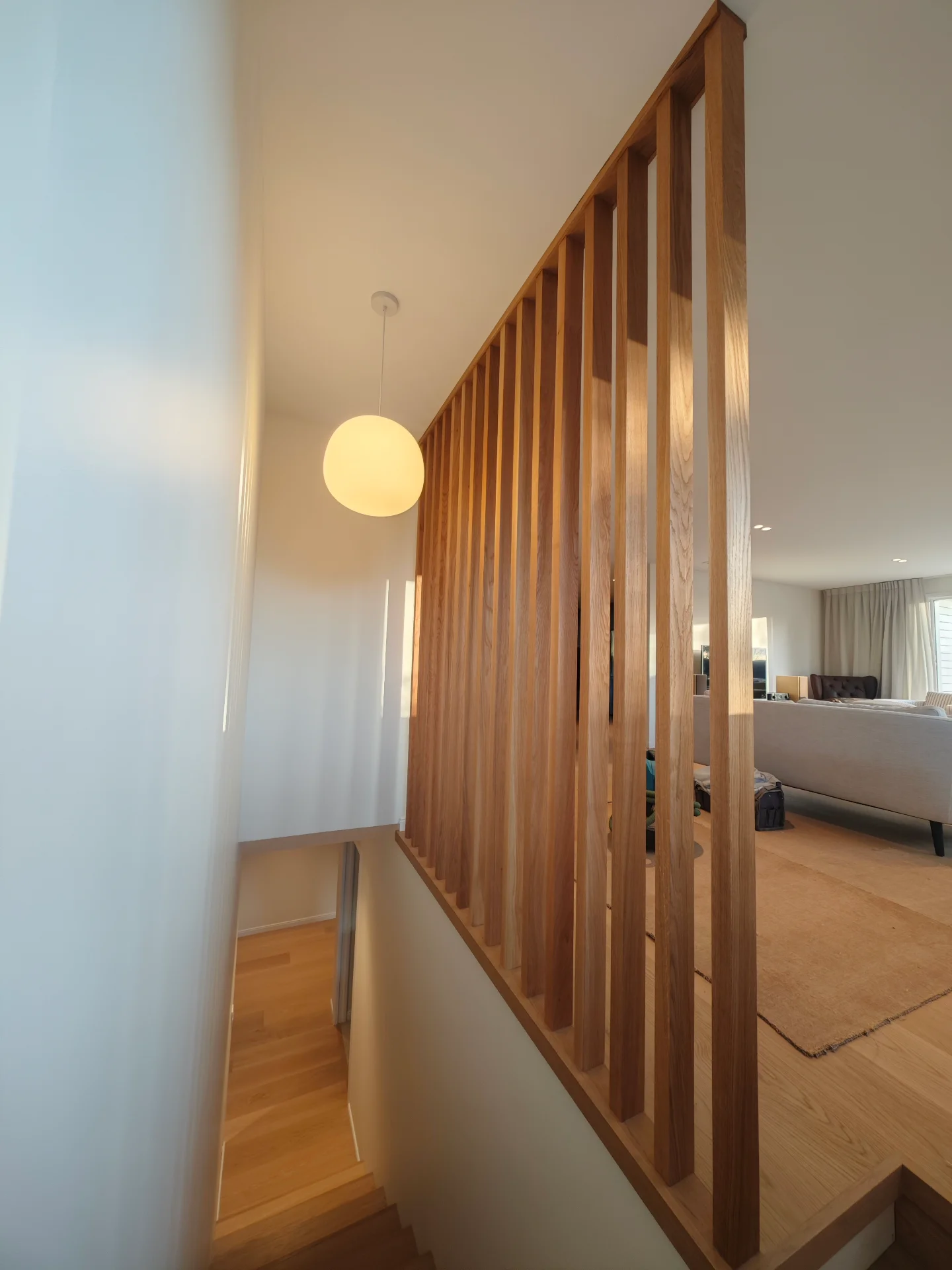
From the stair side, the screen works almost like a timber filter. You can see the warm pendant light through the gaps, the stair below, and the room beyond. Nothing feels closed off. At the same time, the repeated oak members give the edge of the landing more presence.
This is one reason timber screens suit Auckland homes where open-plan areas still need moments of definition. They can mark a stair, hallway, entry or living zone without turning it into a corridor. Look, it is a small intervention compared with a full room fit-out, but it changes how the space reads.
Oak warmth against clean white walls
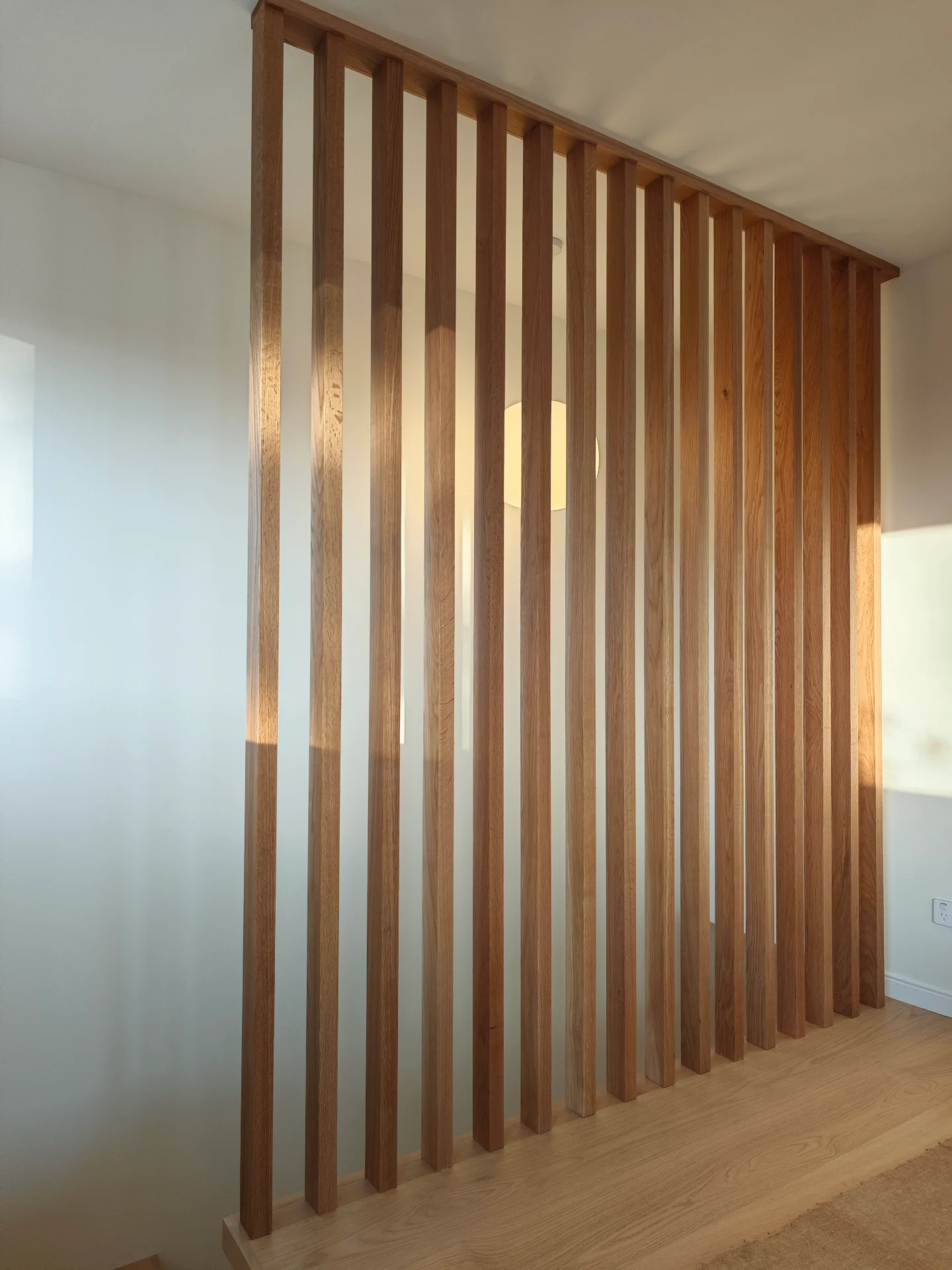
The surrounding interior is restrained: light walls, pale flooring, simple lines and soft natural light. The oak gives that palette some warmth. It also adds a tactile surface, which is important in a space that could otherwise feel quite flat.
The finished views show the slats running from the base up to a top rail, with the screen sitting neatly between the ceiling line, wall edge and floor platform. The result is architectural, but not overdone. It feels made for the space rather than dropped into it.
A practical detail for custom joinery projects
For anyone planning a similar timber screen, the key questions are usually about location, openness and timber choice. Where does the screen need to sit? How much privacy or separation should it create? Should the timber match flooring, cabinetry or other furniture, or should it stand apart as its own feature?
The photos here show why those details are worth resolving early. The screen is not just a row of slats. It has to land cleanly at the floor and ceiling, hold a consistent spacing pattern, suit the surrounding architecture and look good from both sides.
Planning a custom timber screen in Auckland?
If you are thinking about an oak screen, timber divider, stair screen or custom slat feature, start with photos of the space, rough measurements and a short note about what the screen needs to do. More privacy? A visual boundary? Better warmth in a plain interior? Those answers shape the timber, spacing and fixing details.
Start a custom timber screen enquiry with your measurements, photos and preferred timber style, and INWOOD Furniture can help work through the next steps.