A dining table has to do a fair bit of work in a New Zealand home. Meals, laptops, school projects, weekend visitors, long chats after dinner. So when the table is big, it cannot just look good in a photo. It needs to feel right in the room and hold its own every day.
This custom American black walnut floating dining table does that in a quiet way. The timber has warmth and depth, the top is clean and generous, and the recessed support detail gives the table a lighter look than a standard heavy-frame design. It is solid, but it does not feel like a block sitting in the middle of the room.
You can see the original project in the American black walnut floating dining table gallery, including the design drawings, workshop build, and final installation.

The Floating Detail Is the Point
The word floating can get thrown around a bit, but in this project the idea is visible. The tabletop sits proud above a recessed support structure, leaving a shadow line under the top. That small gap makes a big difference. Instead of the table reading as one heavy mass, the top appears to hover slightly over the frame.
It is still a practical timber dining table. It still has strong legs, rails, and support. But the detail gives it a more refined look, especially in a bright open-plan room where a chunky table could easily feel too dominant.

The early close-up shots show how much thought went into that relationship between leg, frame, and top. The table was not just built flat and square. The shadow line, offsets, and support pieces all had to be planned so the table would feel clean once finished.

American Black Walnut With a Calm, Rich Look
American black walnut is a good fit for this kind of dining table because it brings character without shouting. The grain has movement, but it is not wild. The colour sits in that warm brown range that works well with pale floors, soft furnishings, black window joinery, and natural light.
That matters in a Kiwi home. Many dining spaces now sit beside kitchens and lounges, not in a closed-off formal room. The table has to work with the whole living area. Walnut gives the room a centre point, but it still feels relaxed enough for everyday use.

The workshop photos show the frame coming together before the finished surface is installed. You can see the long rails, square legs, clamps, and the structure that sits under the top. This is the less glamorous part of the job, but it is where the table gets its strength and clean lines.
A Tabletop Built From Real Boards
The top has its own story. In the glue-up image, the walnut boards are lined up, clamped, and marked out before finishing. This is where board selection and grain direction start to matter. On a large dining table, the surface is the thing people see and touch every day, so the grain needs to feel balanced across the whole length.

Once the top is flattened and finished, the walnut settles into a calmer, deeper tone. The finished workshop view shows a broad surface with long grain lines and a clean rectangular shape. No extra fuss. Just timber doing the work.

That is often the best approach with walnut. Let the material carry the piece. You do not need decorative tricks when the timber already has that natural depth.
From Drawing to Finished Form
The design drawing helps explain what the final table is doing. It shows the proportions of the top, leg, and recessed support section, and it makes clear that the floating effect was designed from the start rather than added later.

The underside view in the workshop is where the idea becomes real. You can see the top sitting above the support rail, with the leg dropping below. That shadow line is doing a lot of visual work. It keeps the table from feeling too heavy, while still leaving enough structure for a proper dining table.

This is the kind of detail that suits custom furniture. It is subtle, but it changes the whole feel of the piece. A shop-bought table might get the general size right, but a custom build can tune the proportions, edge detail, leg placement, and finish around the actual room.

Finished for a Real Dining Space
The installed photos show the table doing what it was made for: sitting in a bright dining area, surrounded by chairs, with the living space close by. It feels substantial enough for a full dining setting, but the floating detail and slim shadow under the top keep it from taking over the room.
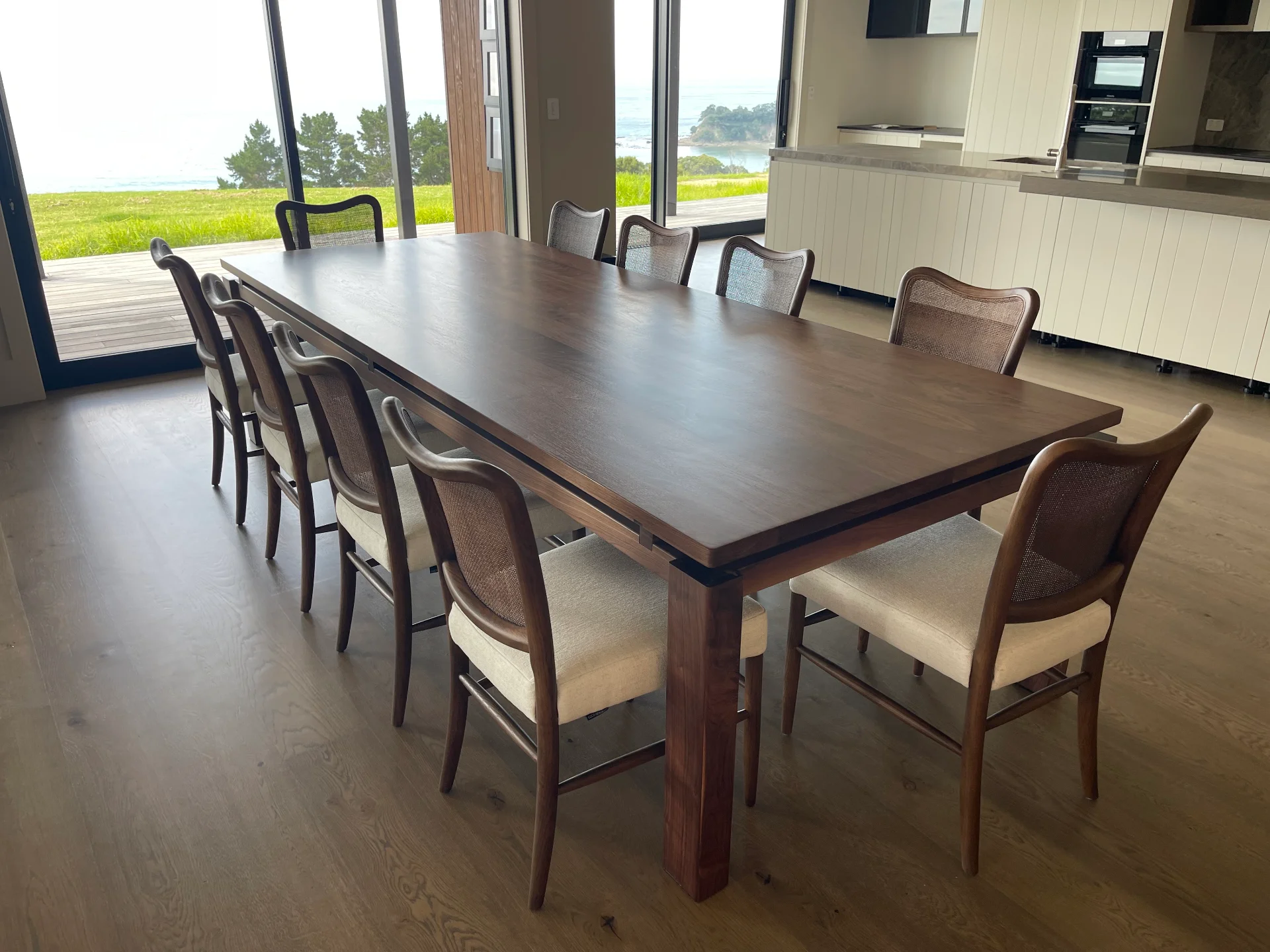
The walnut also plays nicely with the other warm materials in the space. Timber wall lining, soft seating, natural light, and neutral flooring all sit comfortably with the darker table. It feels grown-up, but not precious.
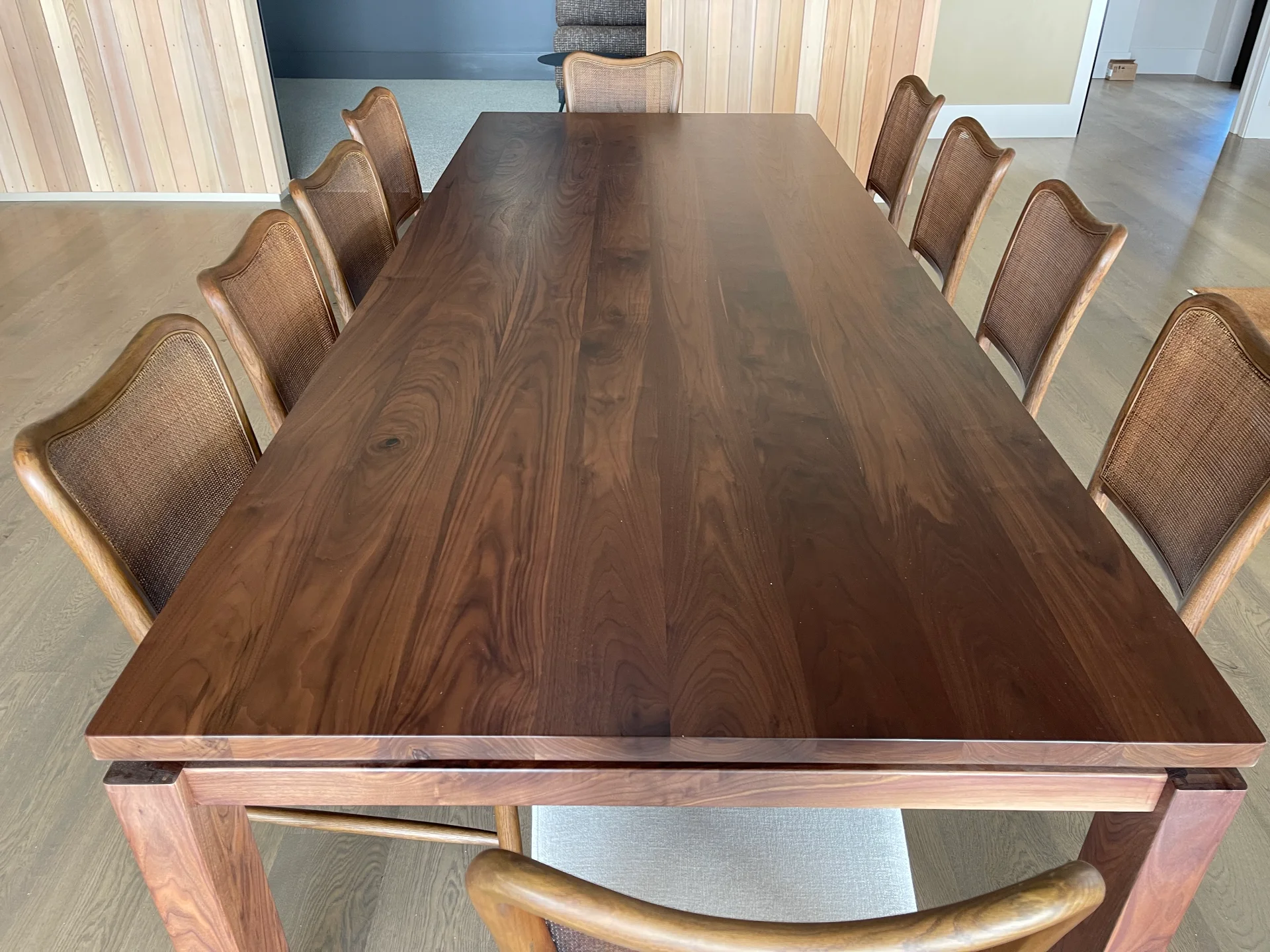
That is the sweet spot for a Kiwi dining table. Good enough to be a feature, practical enough to use. Nobody wants a table that makes the room feel like a showroom where you are scared to put a plate down.
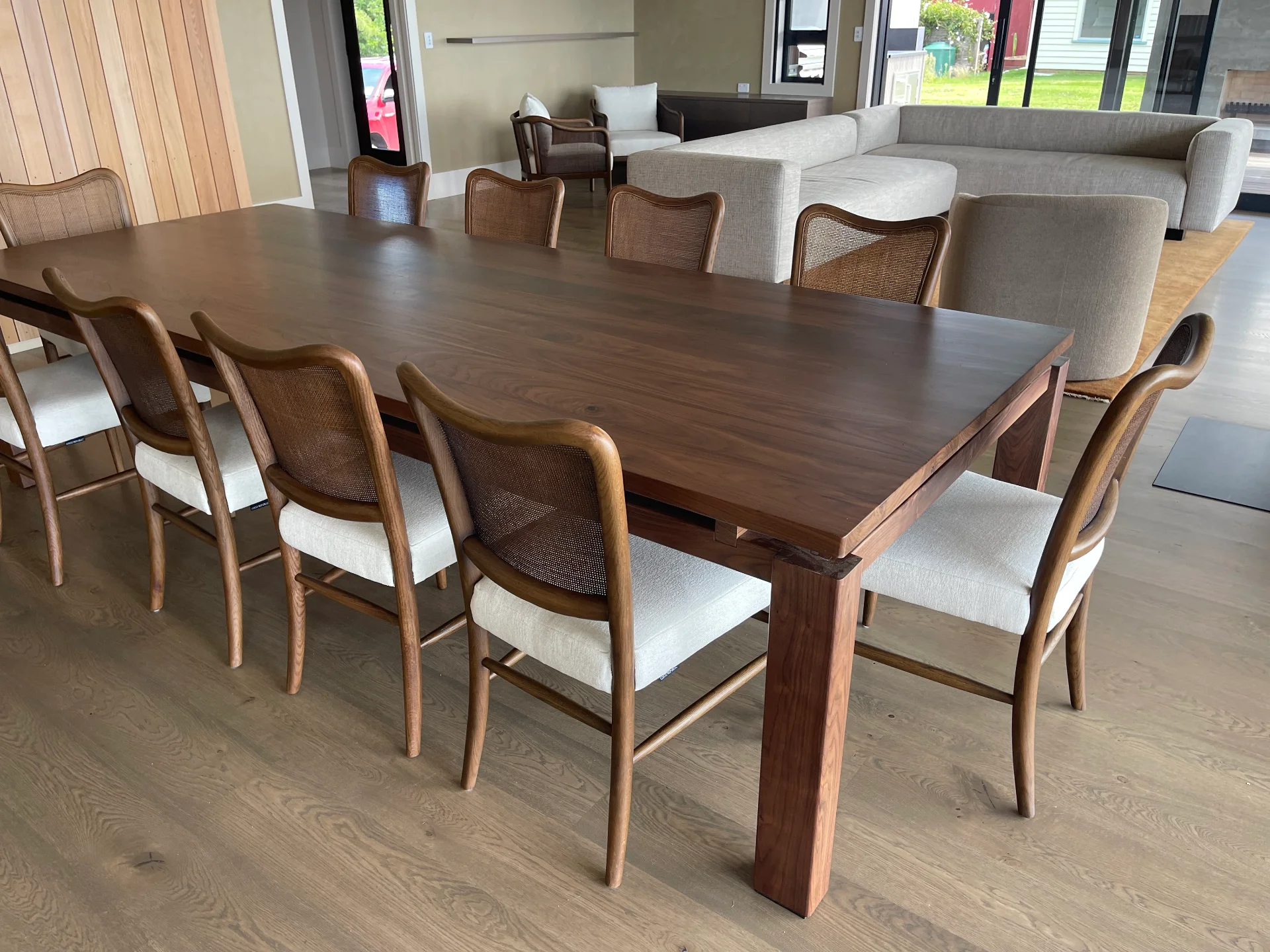
Planning a Similar Custom Dining Table
If you are thinking about a custom dining table in Auckland, start with the room and the way you use it. How many people need to sit comfortably? Do you want a lighter floating look, a heavier farmhouse feel, or something more minimal? What timber tones suit the flooring, kitchen, chairs, and surrounding furniture?
A project like this is useful because it shows the value of designing the detail properly before the workshop build begins. The top, support frame, legs, and finish all need to work together. When they do, the table feels simple at the end, even though there is a fair bit going on underneath.
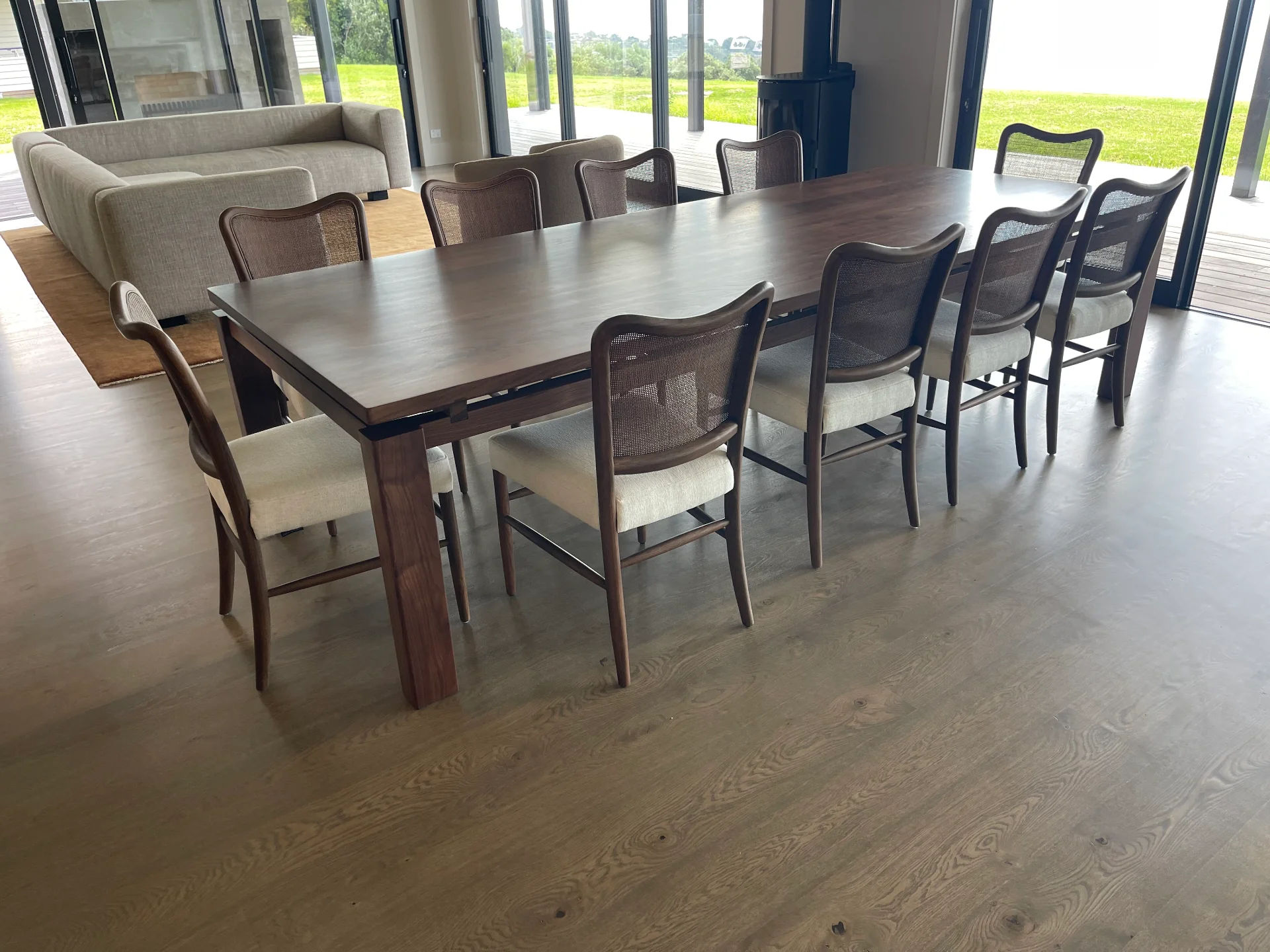
View the original project in the floating American black walnut dining table gallery, or send through your room measurements, chair count, and a few reference photos to start a custom table enquiry.