From pale ash to a black dining table top
Some timber projects change completely once the finish goes on. This one is a good example.
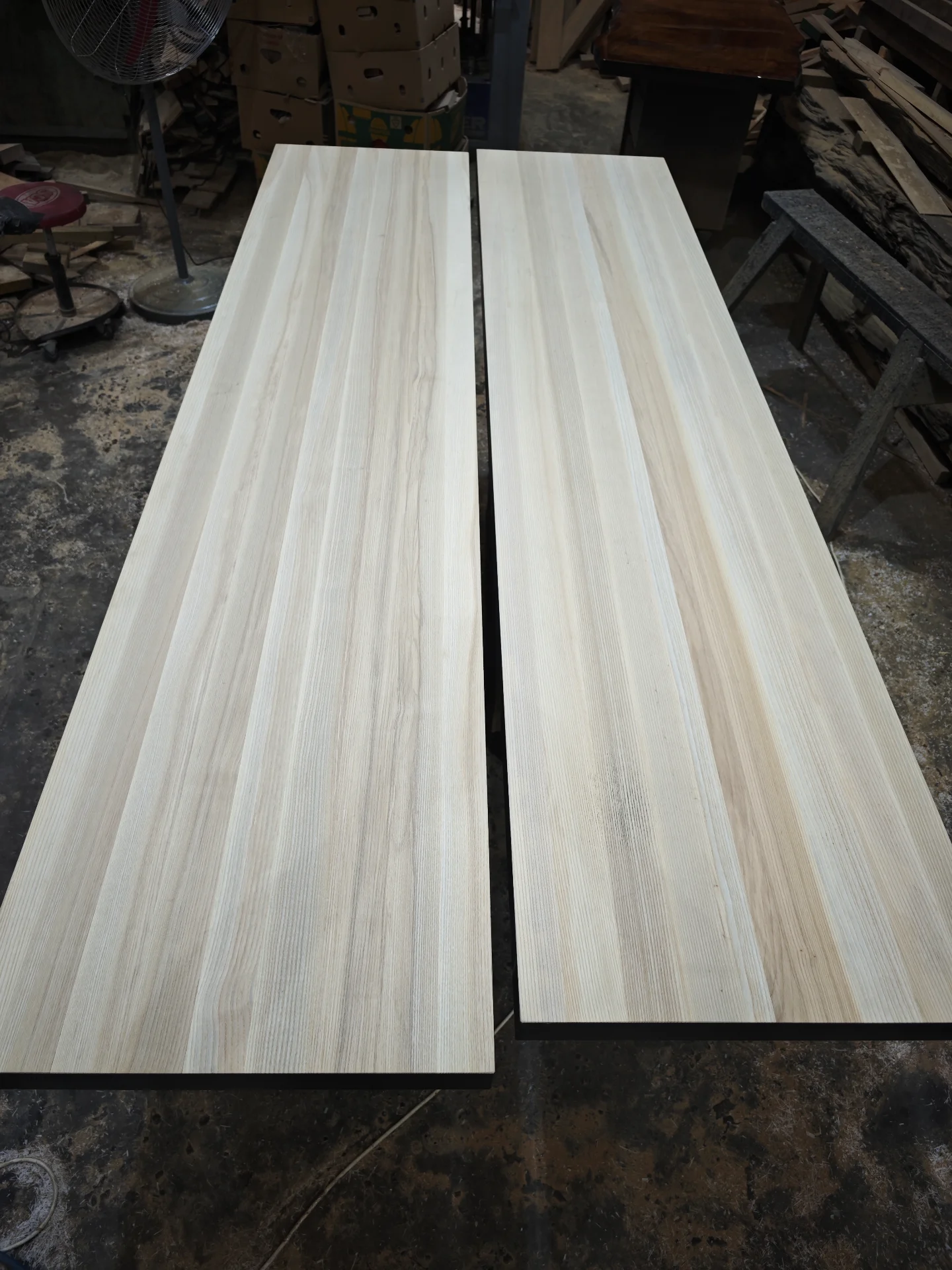
The gallery starts with pale ash boards laid out in the workshop: long, clean, and quietly striped by the grain. By the next images, the same material has become a set of black dining table tops with the ash texture still visible under the finish. The shape is simple. Long rectangles, crisp edges, no decorative fuss. But the shift from raw ash to black PU gives the piece its real character.
This project is linked to INWOOD Furniture's Vertical laminated ash dining table top in black PU gallery. The project record lists it under Bespoke Furniture, with Kitchen & Bathroom and Commercial Fitting categories also attached. The final installed setting is not shown, so the story here is about the table-top fabrication and finish shown in the workshop.
Why vertical-laminated ash works for a clean table top
Ash can give a dining table top a crisp, contemporary feel because the grain is visible but not overly busy. With vertical lamination, the narrow timber sections create a consistent rhythm across the surface. It suits a table top where the main job is to look calm, straight and well proportioned.
Look closely at the first image and you can see why the finishing decision matters. A clear finish would have kept the pale timber as the main feature. A black PU finish changes the mood entirely, but it does not flatten the material into a plain black board. The grain still has a role.
The black PU finish does the heavy lifting
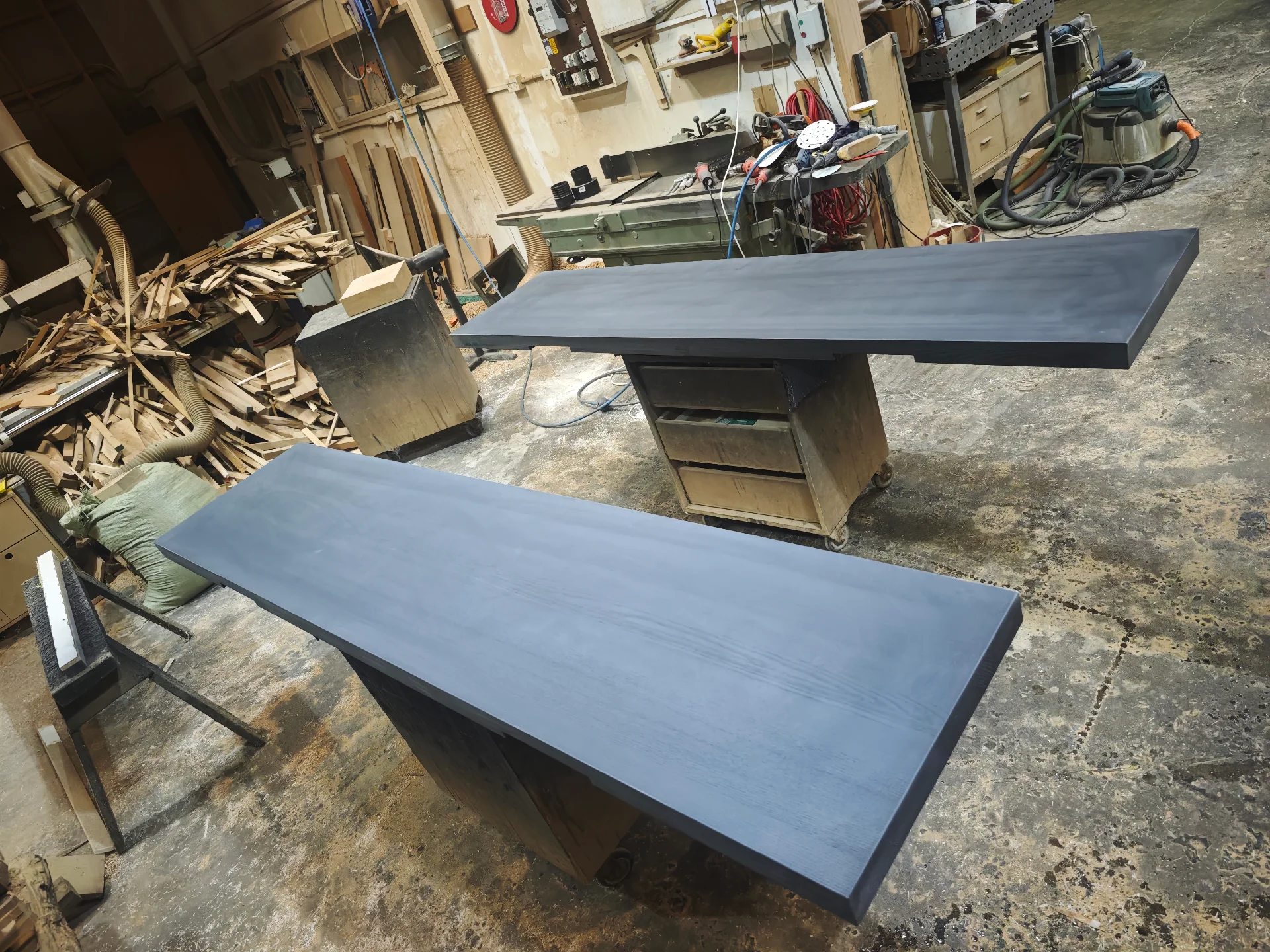
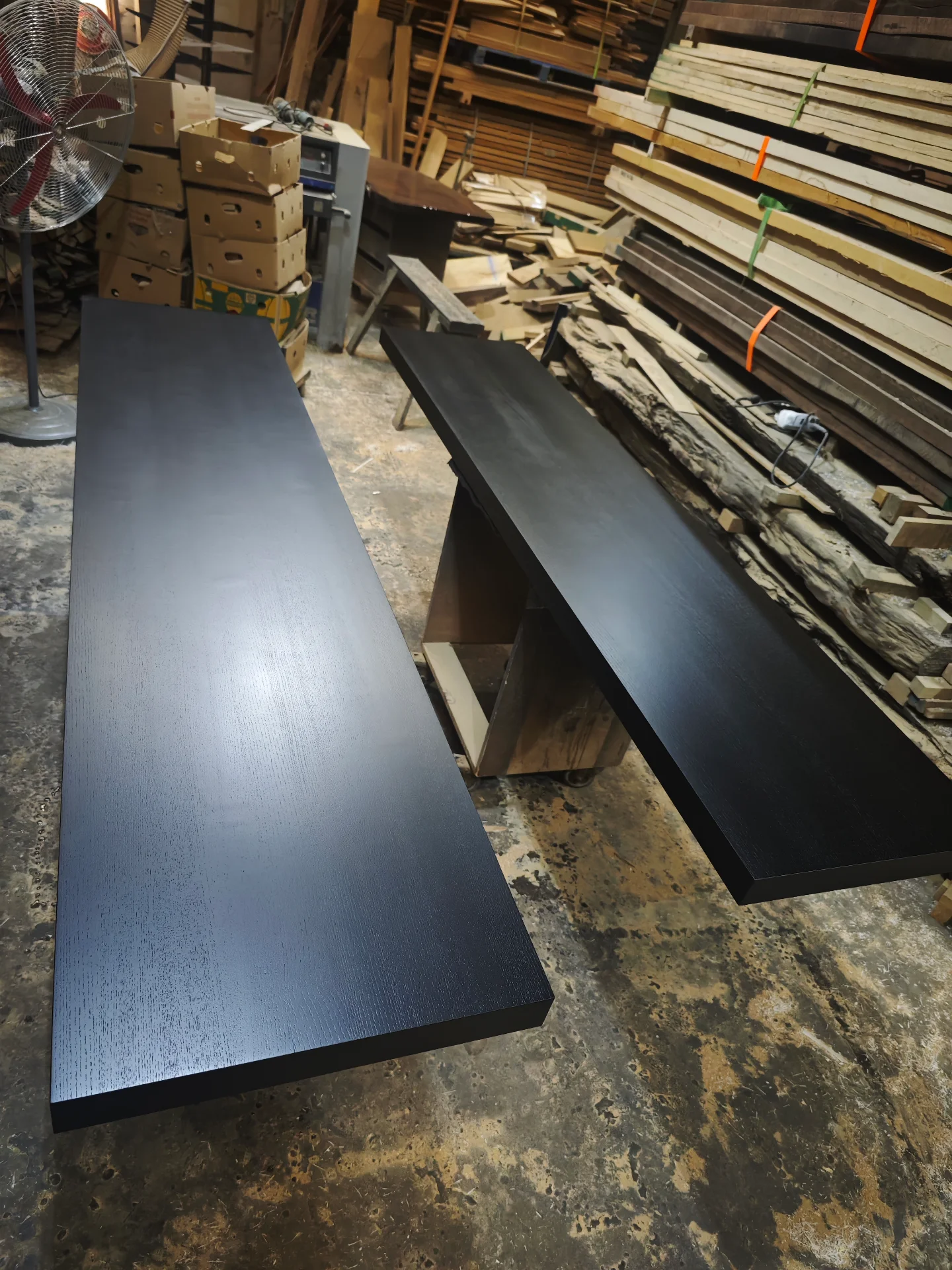
The finished images show two long black tops sitting on workshop supports. The surfaces are dark, but not dead flat visually. Light catches the grain, especially along the near edges, so the ash still reads as timber rather than a plastic-looking panel.
That is the detail that makes the finish useful for a custom dining table project. Black can be sharp and architectural, but it can also become too featureless if the material underneath disappears. Here the finish gives the tops a strong, modern look while leaving enough timber texture to soften it.
The exact PU coating product is not listed in the project record, so there is no point pretending otherwise. What the images do show is a black finished surface with visible grain, clean rectangular proportions and carefully finished edges. For a dining table top, those edges matter. They are what people see and touch every day.
A simple form leaves nowhere to hide
A rectangular dining table top sounds straightforward until you have to make it look right. There are no carved details or heavy profiles to distract the eye. The surface, edge lines and finish have to carry the whole piece.
That is especially true with a black finish. It highlights shape. If an edge is uneven, if the surface is wavy, or if the finish does not sit consistently, the table top will show it. The workshop photos keep the focus on those practical details: long straight edges, broad uninterrupted surfaces, and the contrast between the dark top and the working shop around it.
The project record does not include dimensions, base design, seating number, final room, price or lead time. Those details would need to be set project by project. For a similar custom dining table in Auckland, the important starting points would be the room size, desired seating, base style, edge profile, finish preference and how much daily wear the surface needs to handle.
Where a black ash table top makes sense
This style can work in a residential dining space, but it also has a commercial edge. The project categories include Bespoke Furniture and Commercial Fitting, and the finished tops have the restrained look that can suit hospitality, office, showroom or shared dining settings as well as a private home.
Black timber is useful when the room needs contrast without adding visual clutter. It can sit with concrete, stone, metal, leather, painted cabinetry or lighter timber. The ash grain helps stop the surface from feeling too severe.
Of course, the finish choice should match the way the table will be used. A family dining table, a boardroom table and a hospitality table all face different kinds of wear. That is where a custom furniture maker can help balance material, finish, dimensions and edge detail before the piece is built.
A restrained custom dining table top
The finished result is not trying to be ornate. It is a restrained custom dining table top with a strong black surface, visible ash grain and a clean workshop-made feel. The interest is in the contrast: pale timber transformed by black PU, but still visibly timber underneath.
For clients looking at custom dining tables in Auckland, this project is a useful reference when the brief is modern, dark and practical rather than rustic or highly decorative. It also shows why timber choice still matters even when the final colour is black. The grain, lamination and edge finish all remain part of the result.
Planning a custom dining table top, commercial table, or dark timber furniture piece? Send through approximate dimensions, photos of the space, preferred finish, seating requirements if relevant, and any reference images you like.