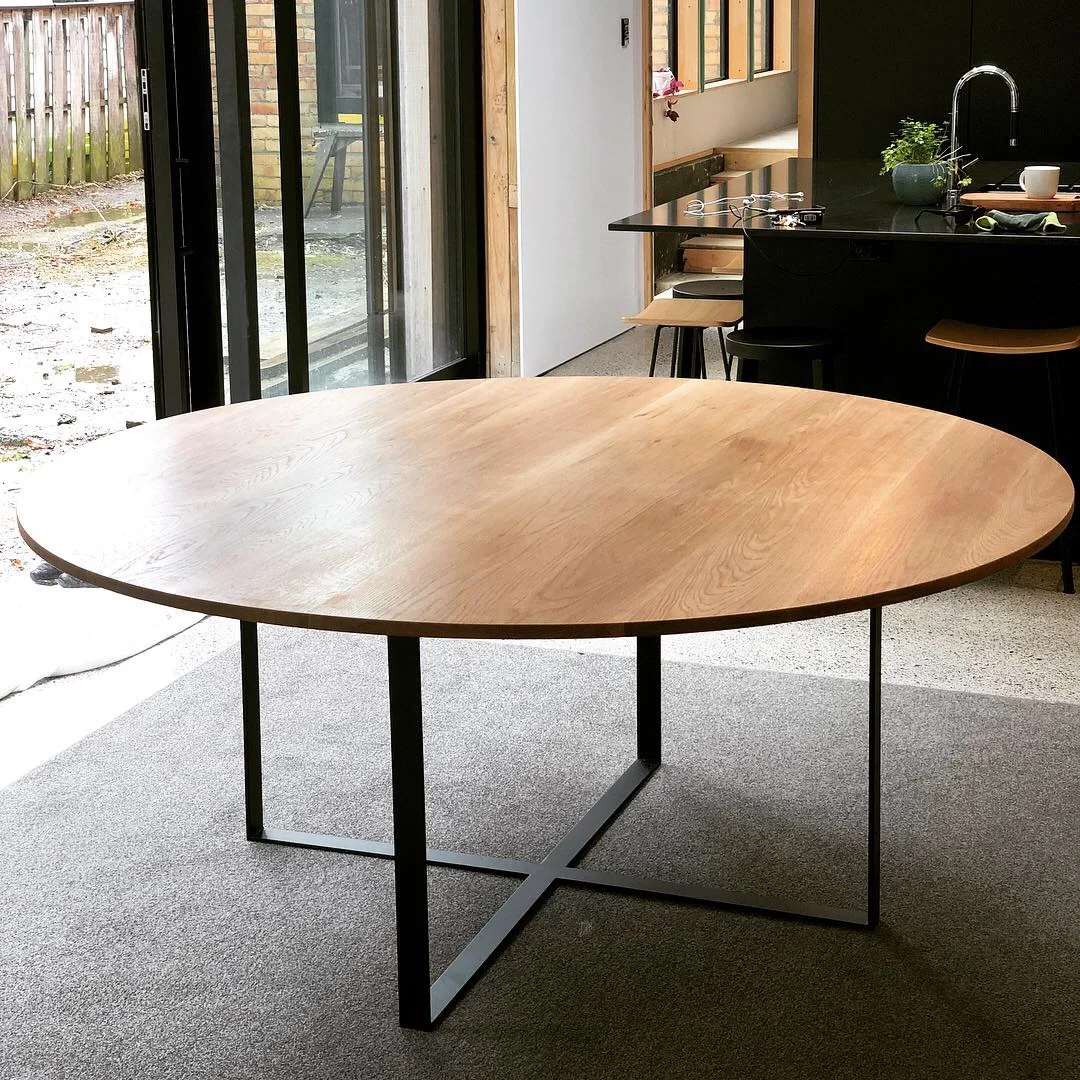
An oval dining table changes how a room flows. There are no sharp corners to navigate, the outline feels lighter than a full rectangle, and the curved edge gives the timber grain somewhere to travel. This custom American white oak dining table brings those qualities together with a slim sculpted top and a dark geometric base.
The project title records “1600”, but no width, height, seating count or formal brief is attached. The 11 gallery images still tell a clear story, moving from the installed table back through shaping, sanding and finishing in the workshop.
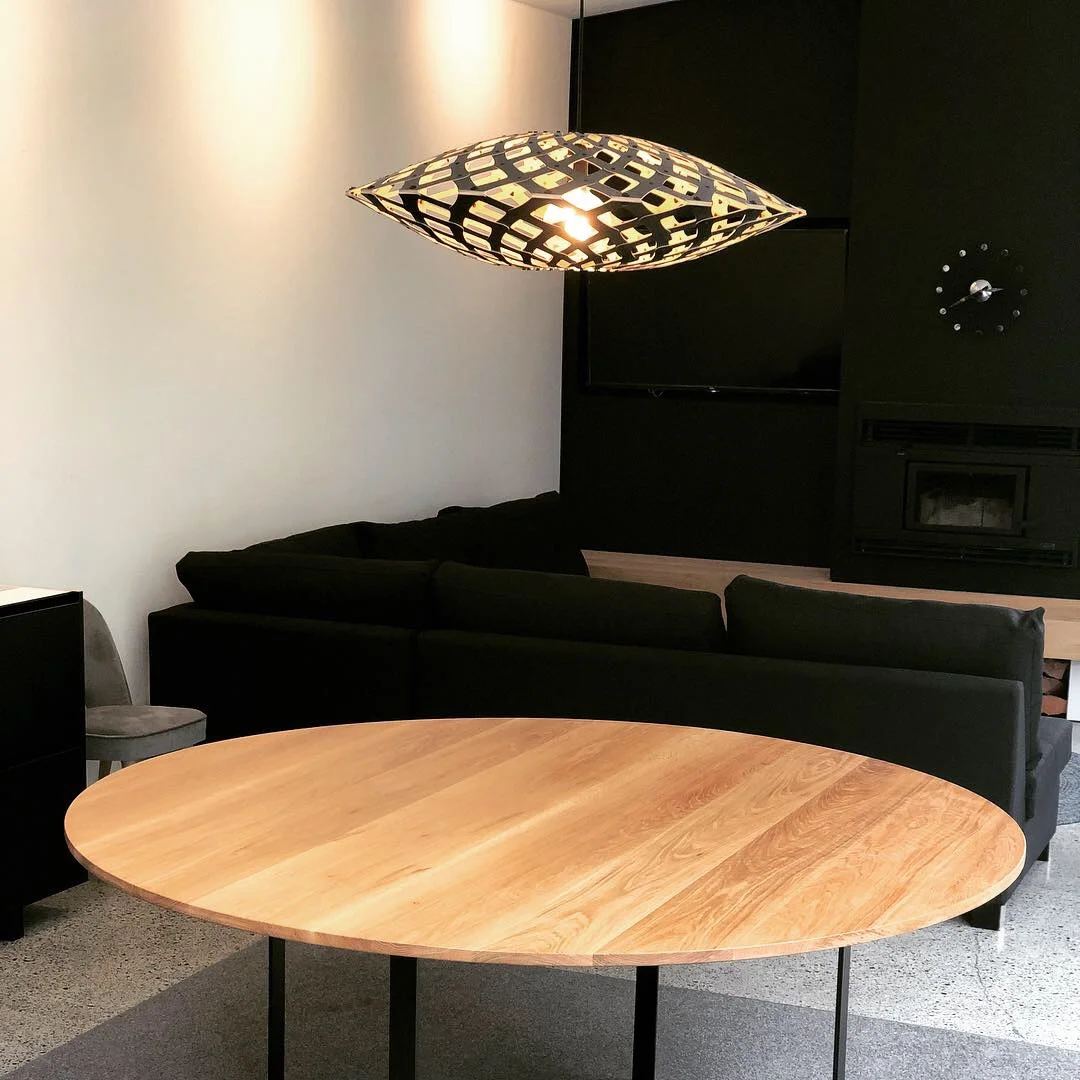
An oval table that keeps the room open
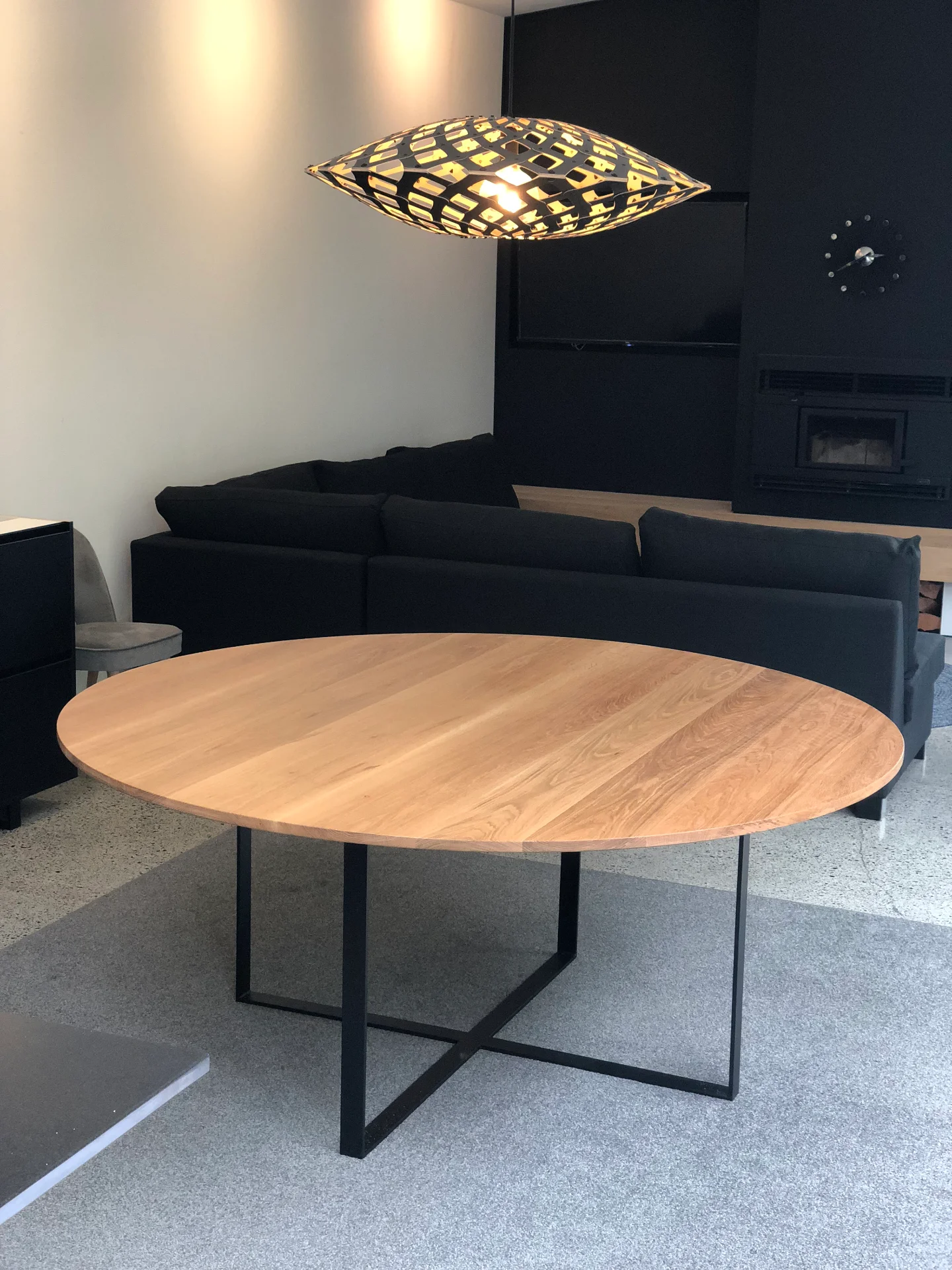
The second installed view shows the complete relationship between top and base. The pale oak surface sits above a dark frame made from clean rectangular lines. Because the support structure is visually open, it doesn’t compete with the curved top or turn the centre of the room into a solid block.
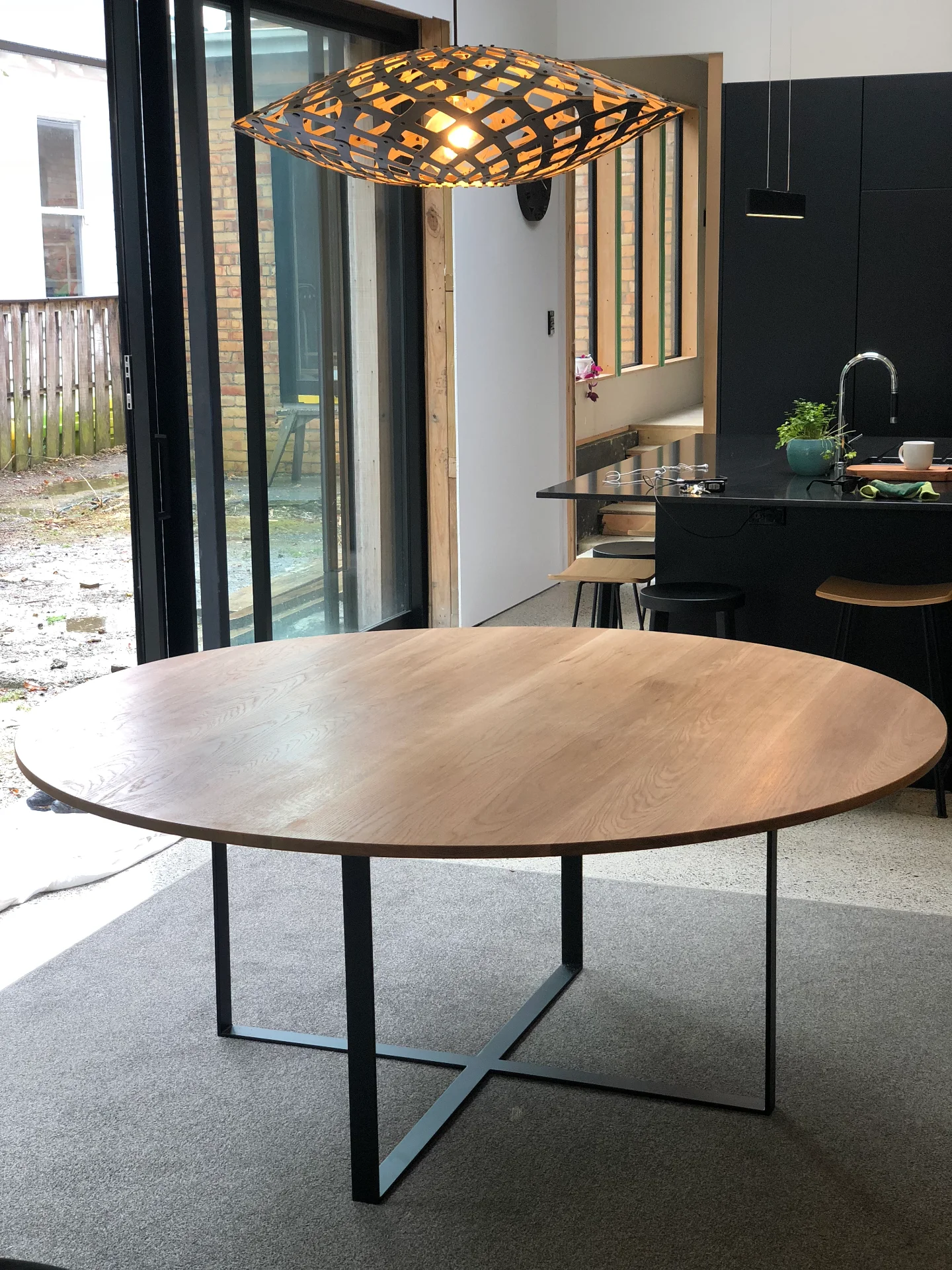
From the opposite side, daylight runs across the grain and makes the oval outline especially easy to read. The table sits between a living area and kitchen, where circulation around the edge matters just as much as seating.
For buyers considering a custom dining table in Auckland, shape should be decided in the room rather than in isolation. An oval can soften movement through a shared space, but the right result still depends on available floor area, chair dimensions and clearance from nearby cabinetry or doors.
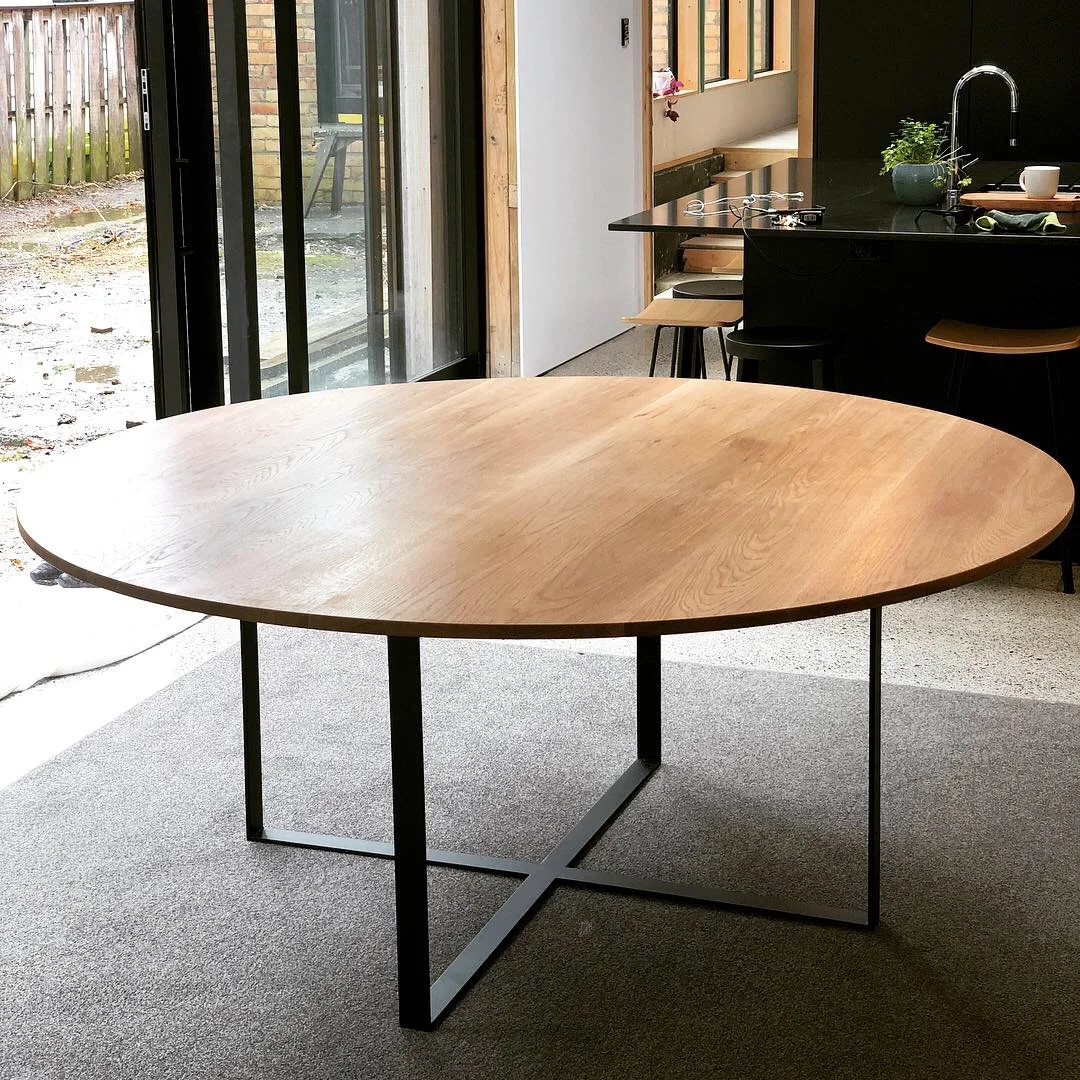
The next image offers a near-identical angle under different light. That repetition is useful: American white oak can shift from pale straw tones to warmer brown depending on daylight, interior lighting and viewing direction.
Shaping a lighter edge profile
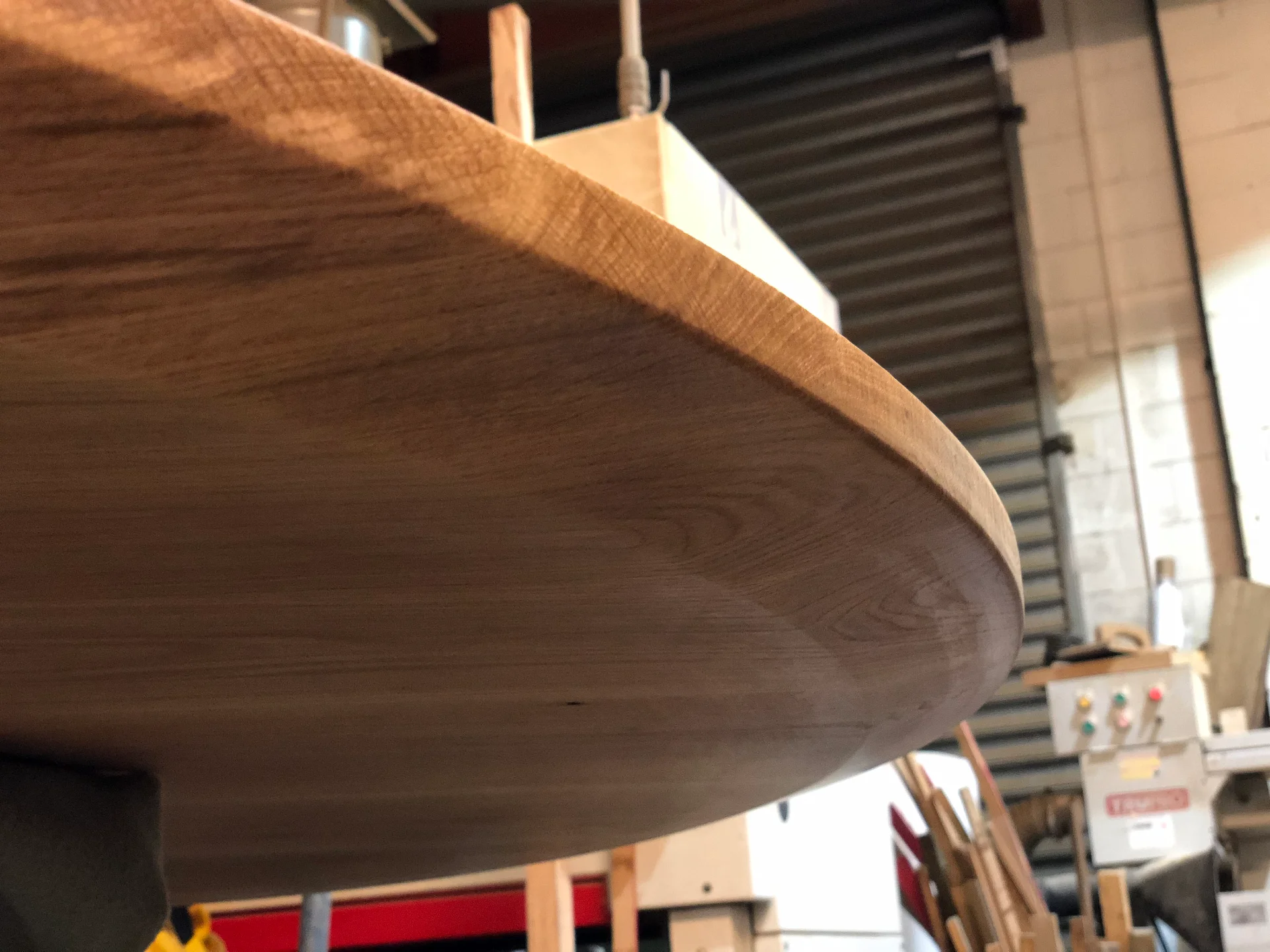
A close workshop photograph reveals one of the project’s most important details. The top doesn’t finish as a blunt vertical slab. Its underside is shaped back towards the centre, creating a slimmer-looking perimeter while retaining more material through the body of the top.
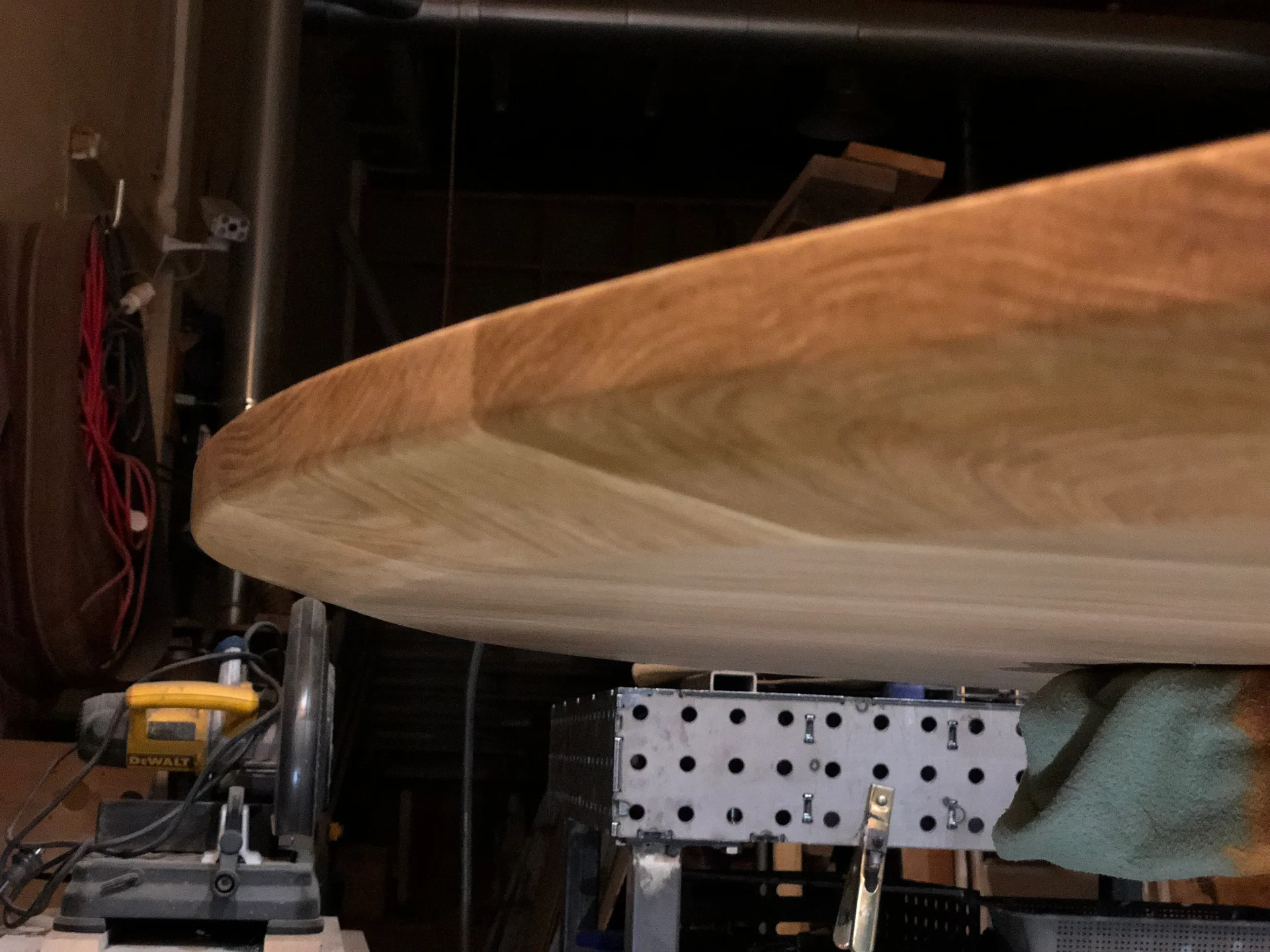
That edge treatment changes the character of the whole piece. From normal standing height, the table reads as light and refined; move lower, and the curved transition underneath becomes visible. It’s a quiet detail, honestly, but it does a lot of work.
Sanding the oval top
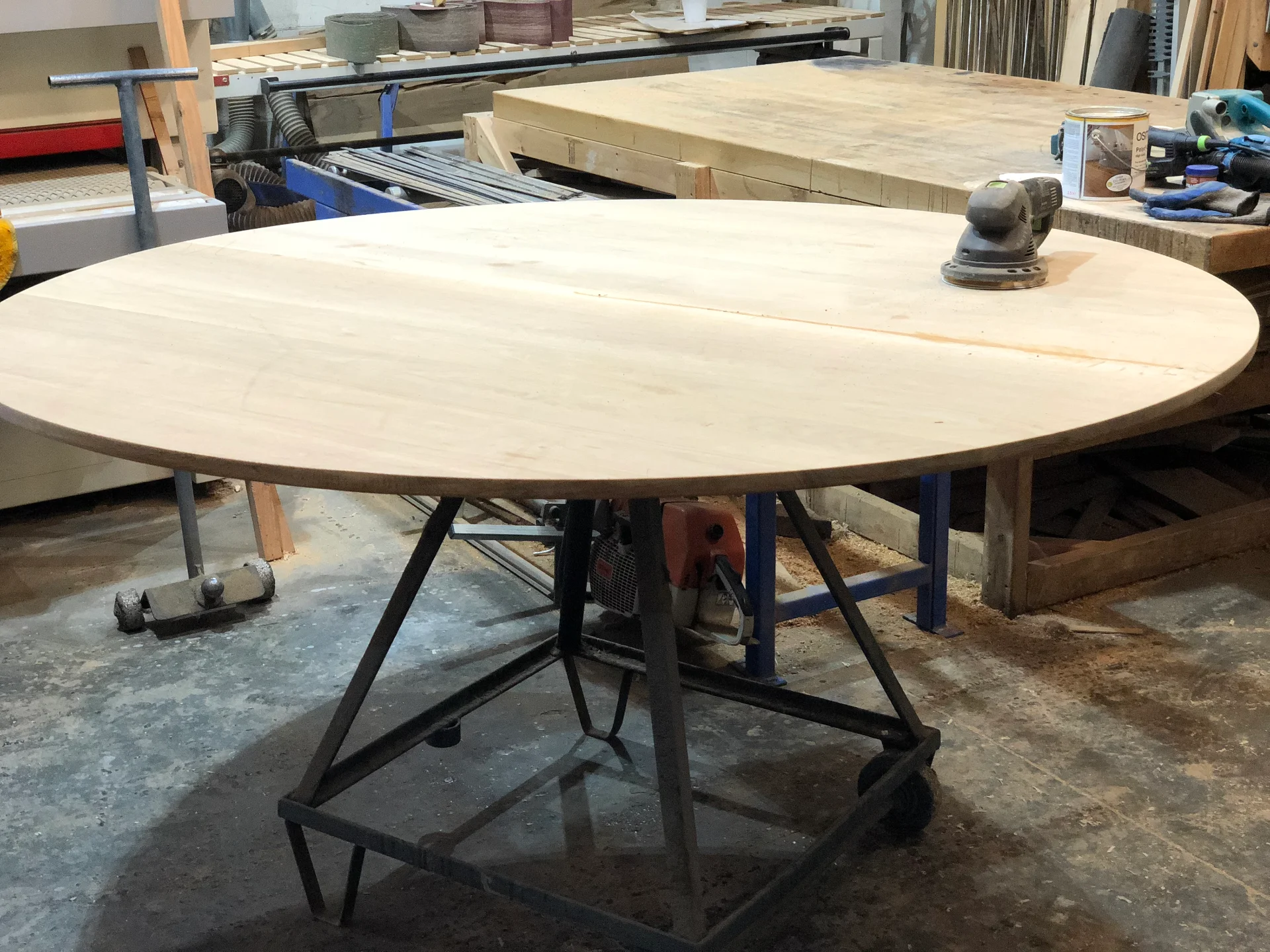
The workshop sequence then steps back to surface preparation. One photograph shows the full oval resting on a movable stand while a sander sits on the timber. At this stage the colour is pale and the joined boards are easy to distinguish.
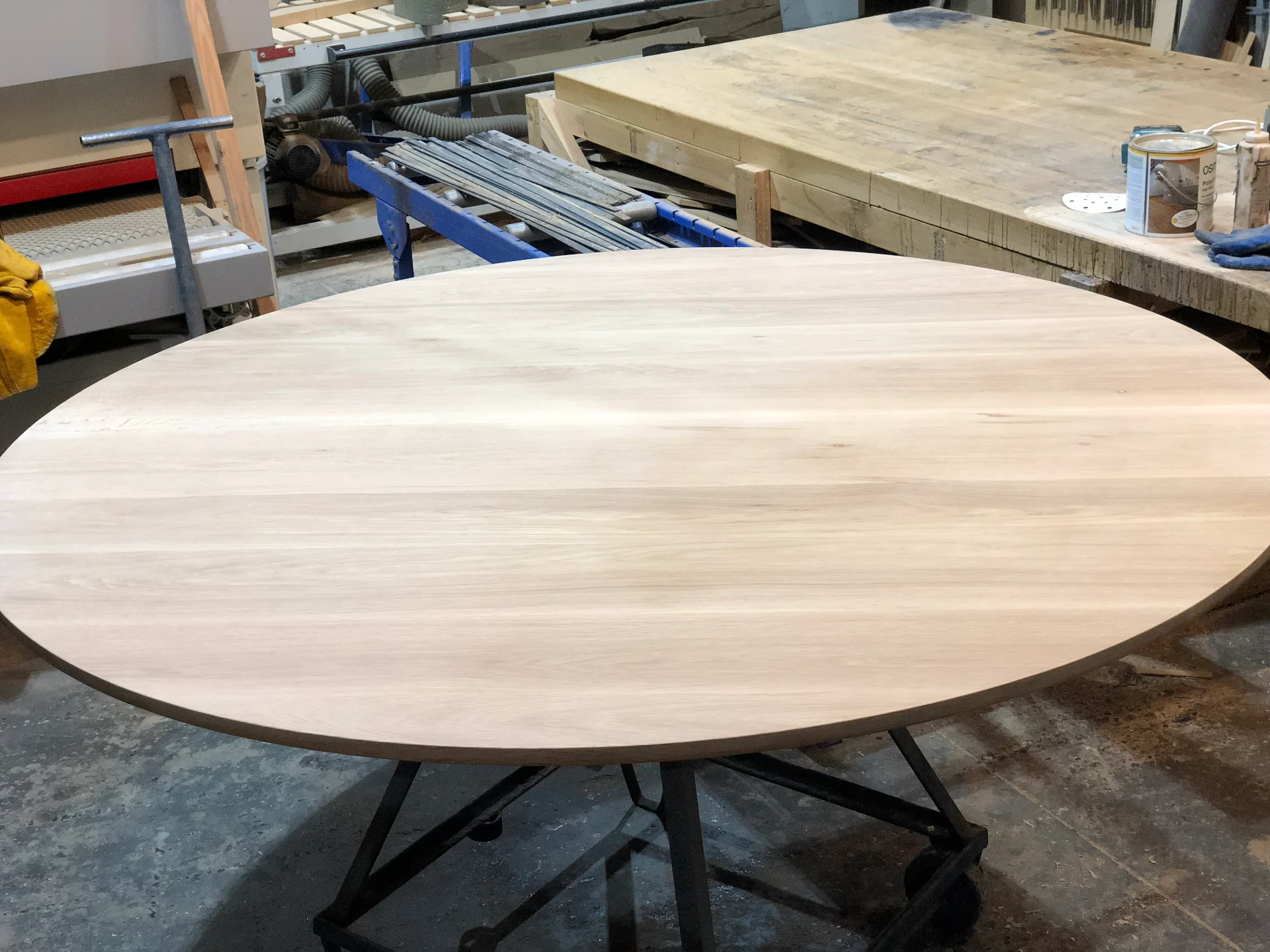
A clean overhead view shows the board layout and flowing grain before the final treatment develops the colour. The central boards run along the table length, while the curved ends cut across changing grain patterns.
Bringing out the American white oak grain
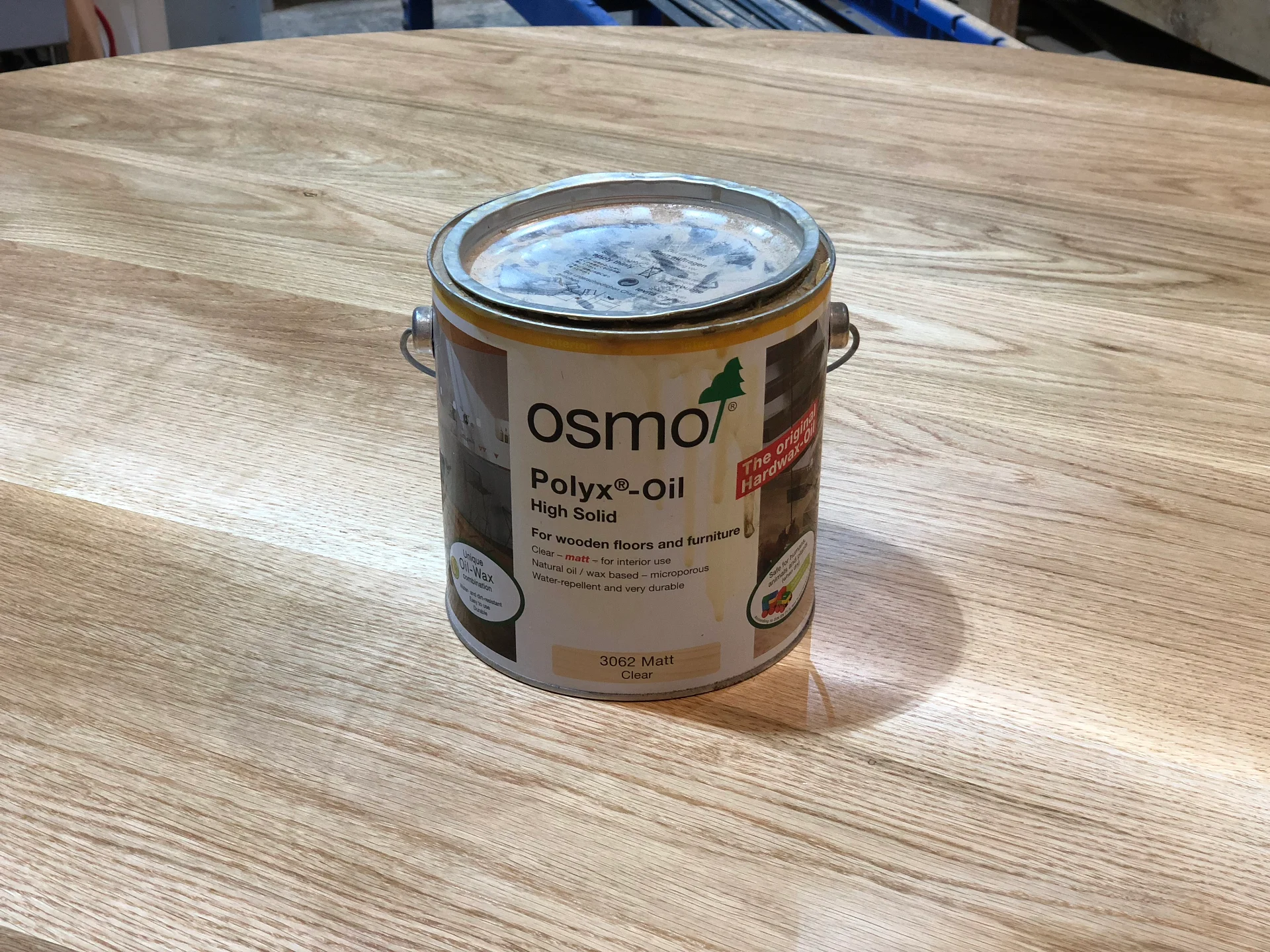
The gallery includes a finishing-product tin placed directly on the tabletop. The label identifies Osmo Polyx-Oil, providing a concrete record of the product pictured during this stage. We won’t infer a specific colour code, coat count or performance specification that isn’t documented.
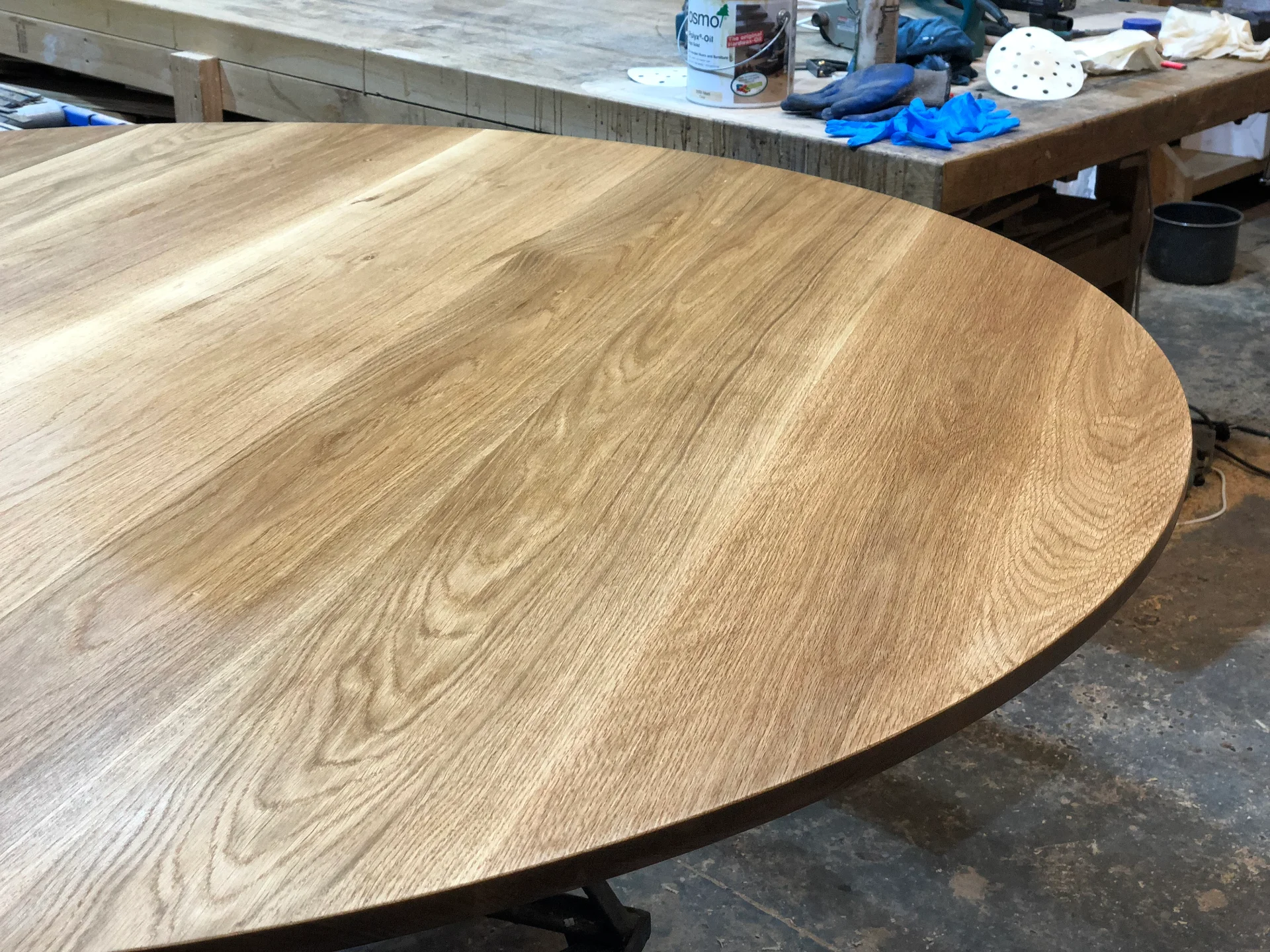
After treatment, the grain reads with more contrast. Long straight sections sit beside broader curved figures near the ends, giving the surface movement without needing decorative inlays or colour effects.
The final workshop photograph returns to the underside edge. It shows the smooth shaped transition beneath the tabletop and the darker perimeter line created by shadow. This is the detail that makes the oval top appear slimmer in the installed photographs.
You can view the complete American White Oak Dining Table gallery to compare all 11 workshop and installed views.
Planning a custom oak dining table in Auckland?
Start with the room and the people using it. Helpful enquiry details include the available floor area, preferred table length and width, chair dimensions, usual number of diners, photos of the space, access route and examples of base or edge styles you like. Pricing depends on dimensions, timber selection, edge treatment, base design, finish and delivery requirements.
If you’re considering a custom American white oak dining table in Auckland, discuss your table project with INWOOD Furniture. Send through your room measurements and seating needs so the shape and proportions can be considered together.