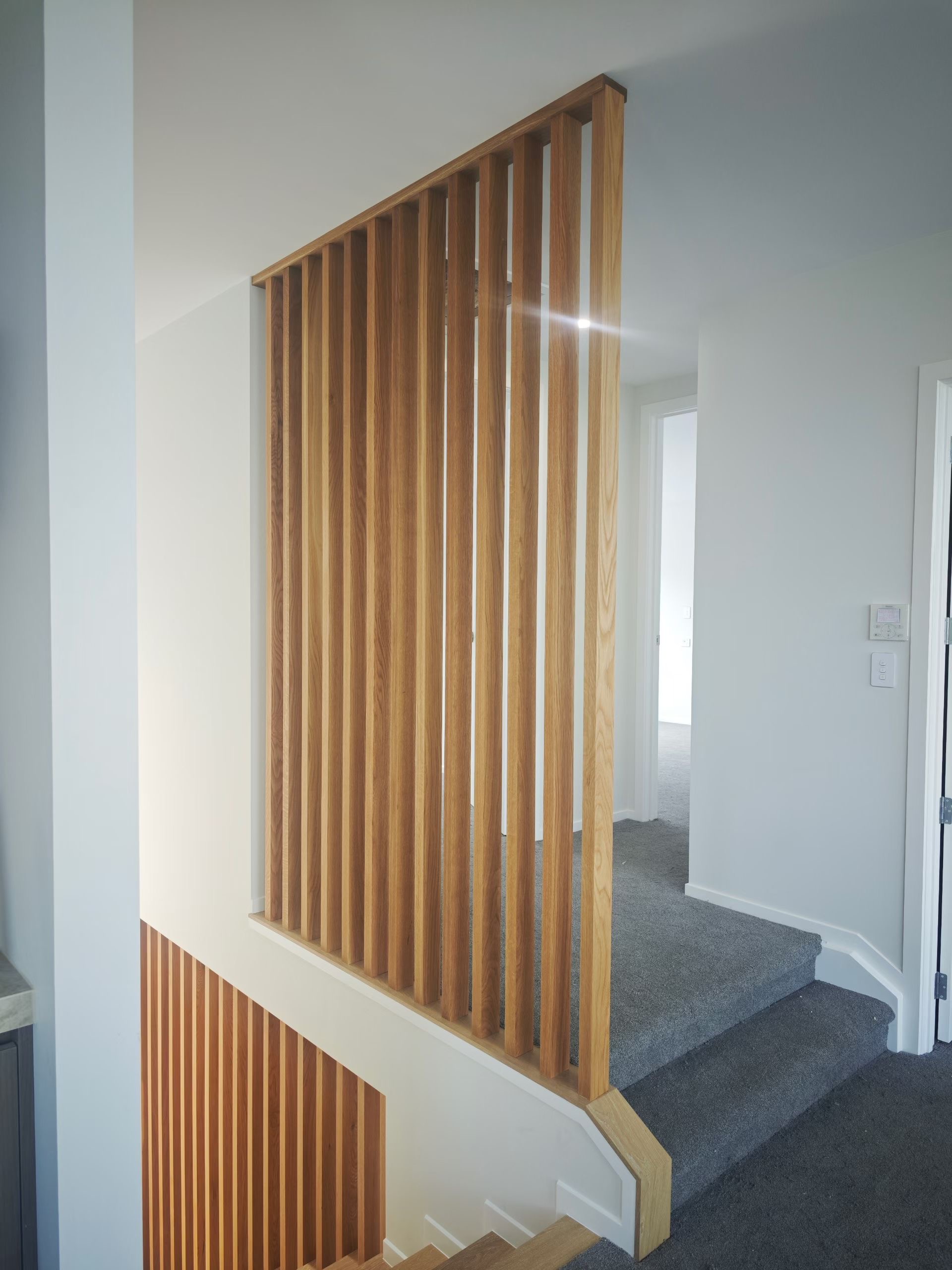
The Problem with Slat Screens
Timber slat screens are everywhere right now. Scroll through any architecture feed and you’ll see them — vertical battens running floor to ceiling, defining spaces without closing them off. They look simple. That’s the trap.
Most slat screens on the market are either MDF wrapped in veneer, or dimensional timber screwed into a frame. The first looks cheap up close. The second moves with the seasons — gaps open, joints crack, and what started as a feature wall becomes a maintenance problem.
We set out to solve this properly.
What We Built
Our timber slat divider system uses solid hardwood — oak, walnut, or ash — machined to tolerances that allow for seasonal timber movement without visible gaps or structural compromise. Each slat is individually milled, finished, and fitted into a proprietary mounting system that we designed and built in-house.
The result is a floor-to-ceiling screen that looks like it grew there. No visible fixings. No trim pieces hiding mistakes. Just solid timber, evenly spaced, catching the light.
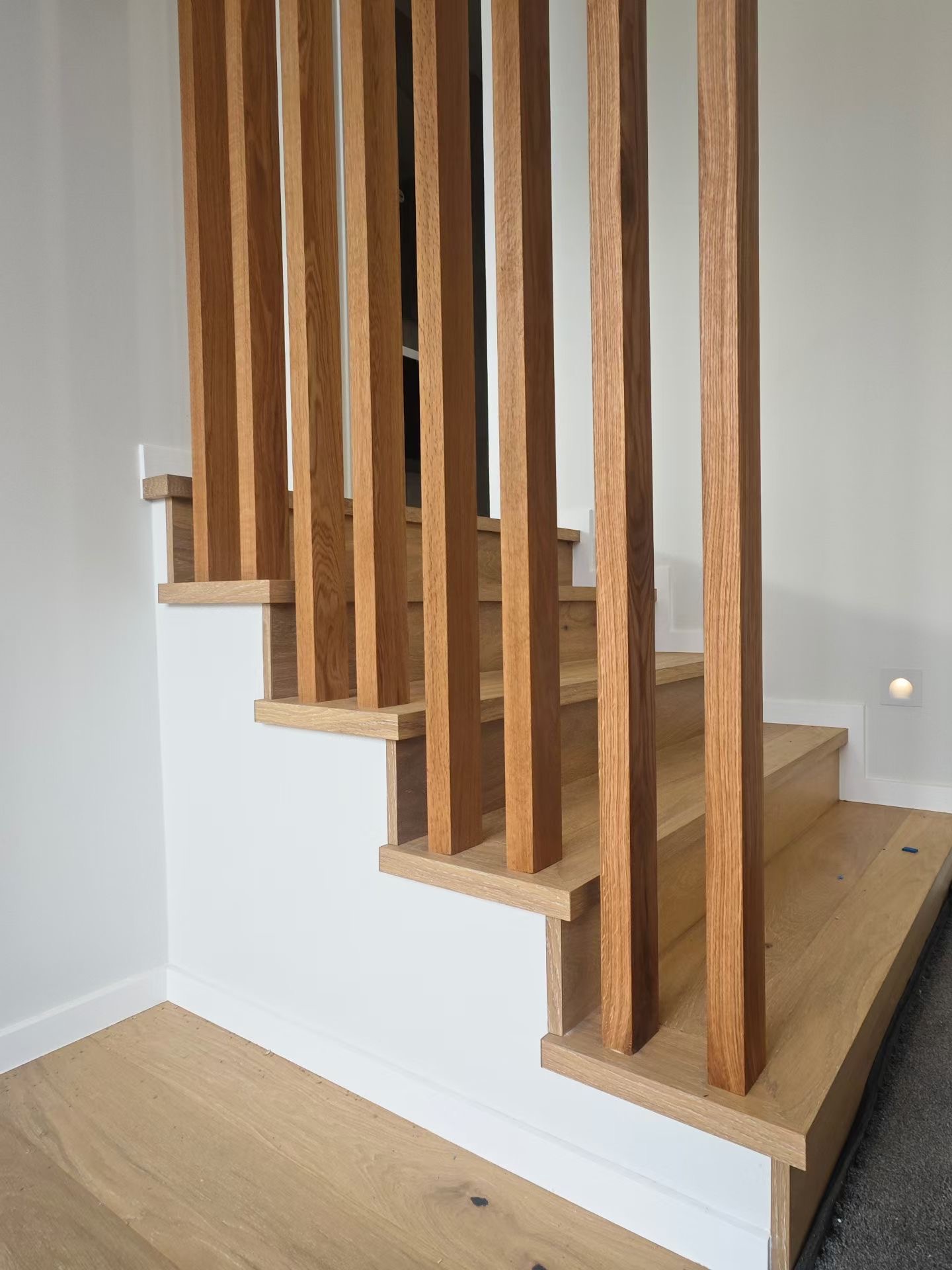
The Process
This is where the complexity lives. What appears to be a series of identical vertical battens is actually the result of a multi-stage production process that took us over a year to develop and refine.
Each slat goes through precision dimensioning, profiling, and finishing before being fitted to our custom mounting system. The tolerances involved are measured in fractions of a millimetre — any variation compounds across 20 or 30 slats and becomes immediately visible.
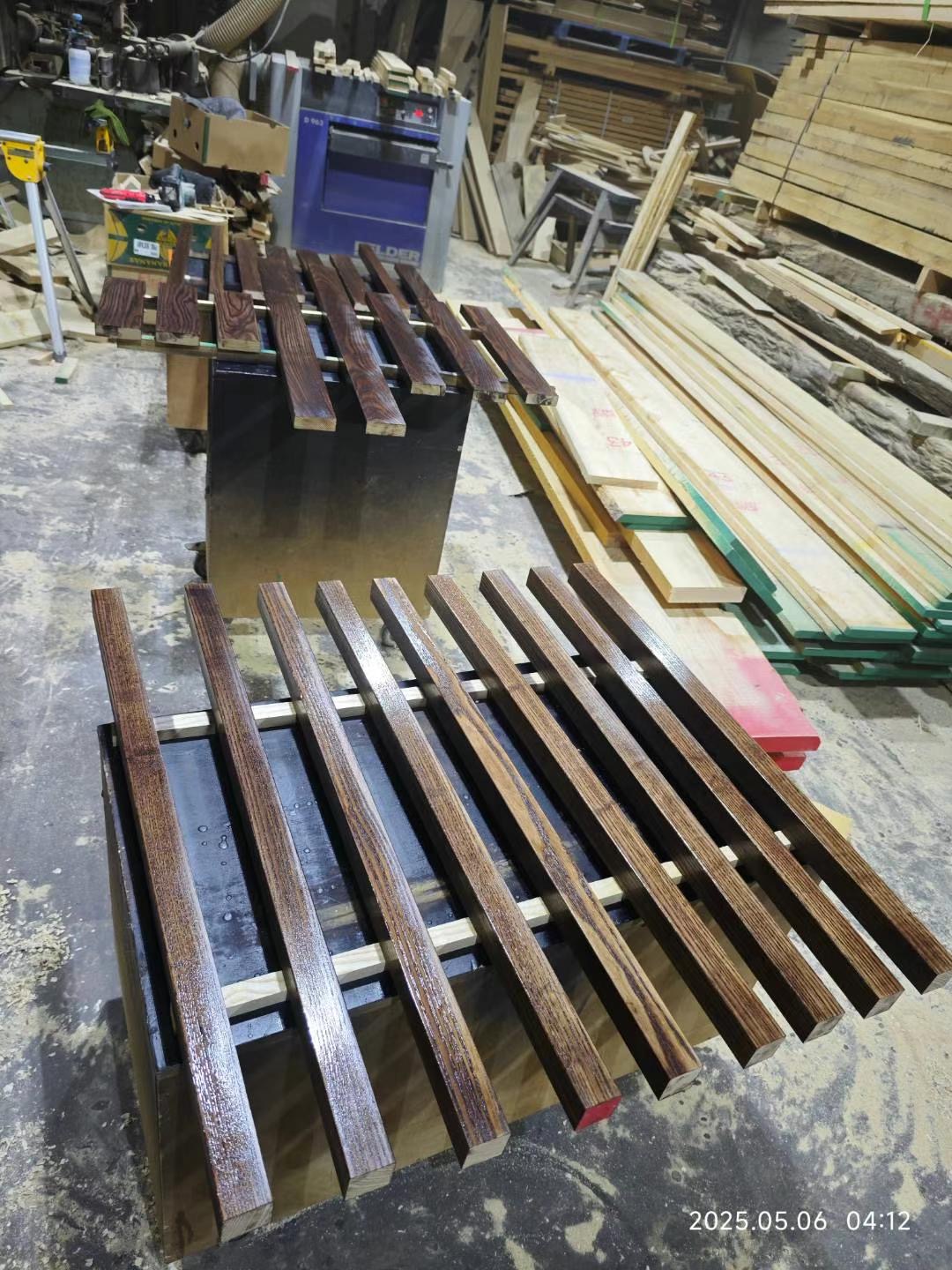
We can’t share the full details of the process — a patent application is currently underway — but we can say that the mounting system allows for timber movement across all four seasons while maintaining perfectly even spacing. No seasonal adjustment. No call-backs.
Installation
Each divider is custom-built to the exact dimensions of the opening. We survey on site, build in the workshop, and install ourselves. A typical residential installation takes one day on site.
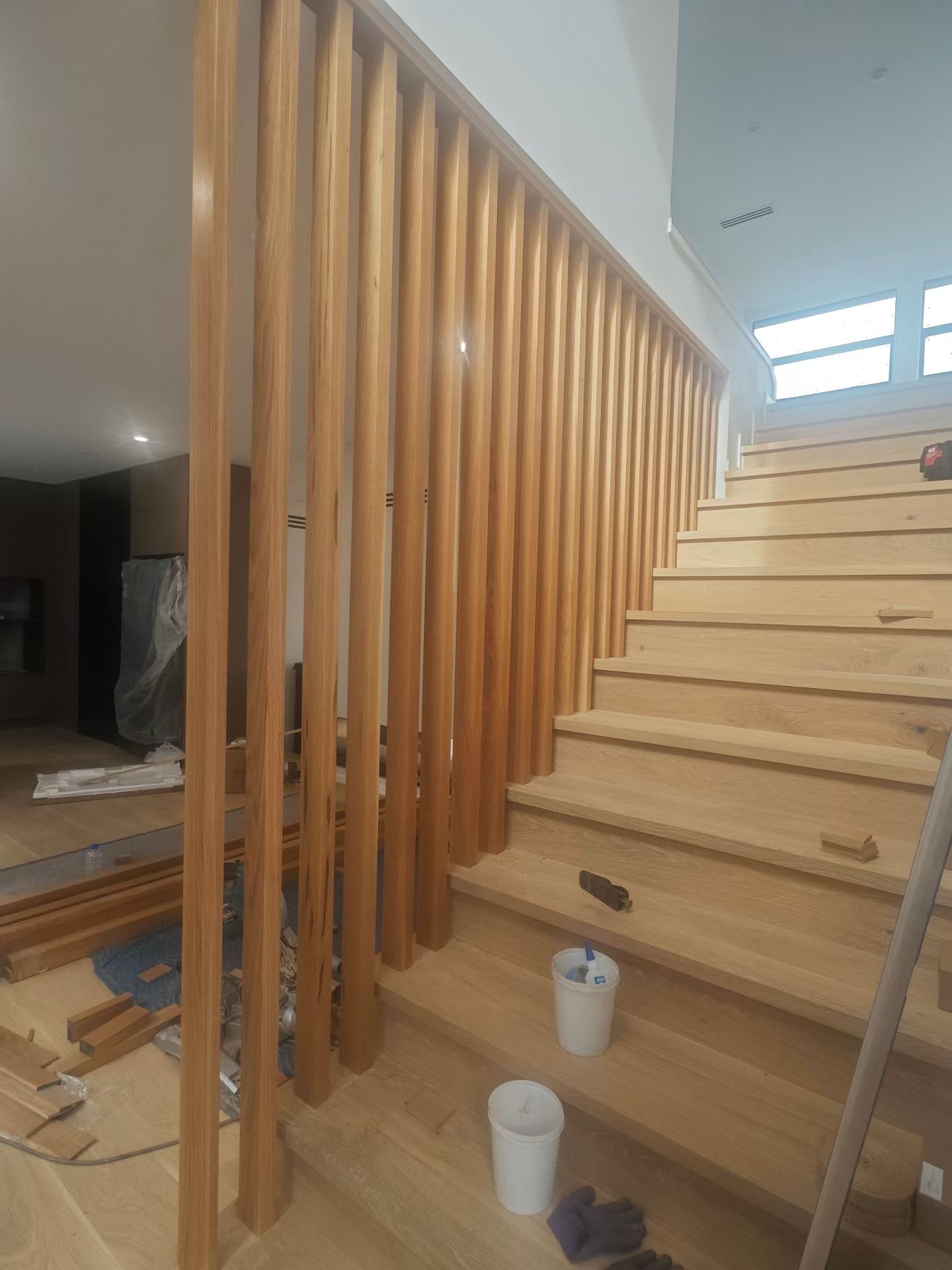
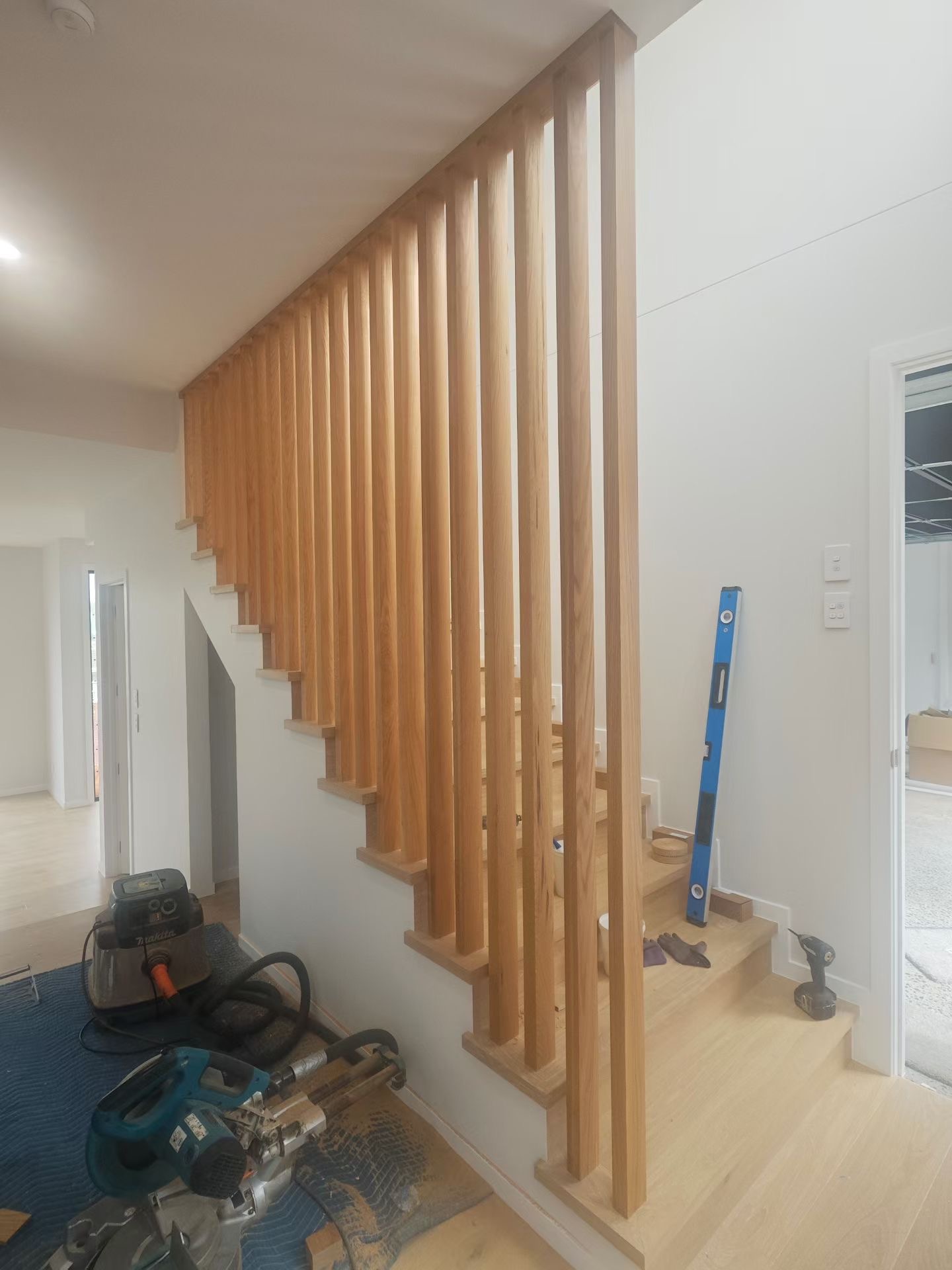
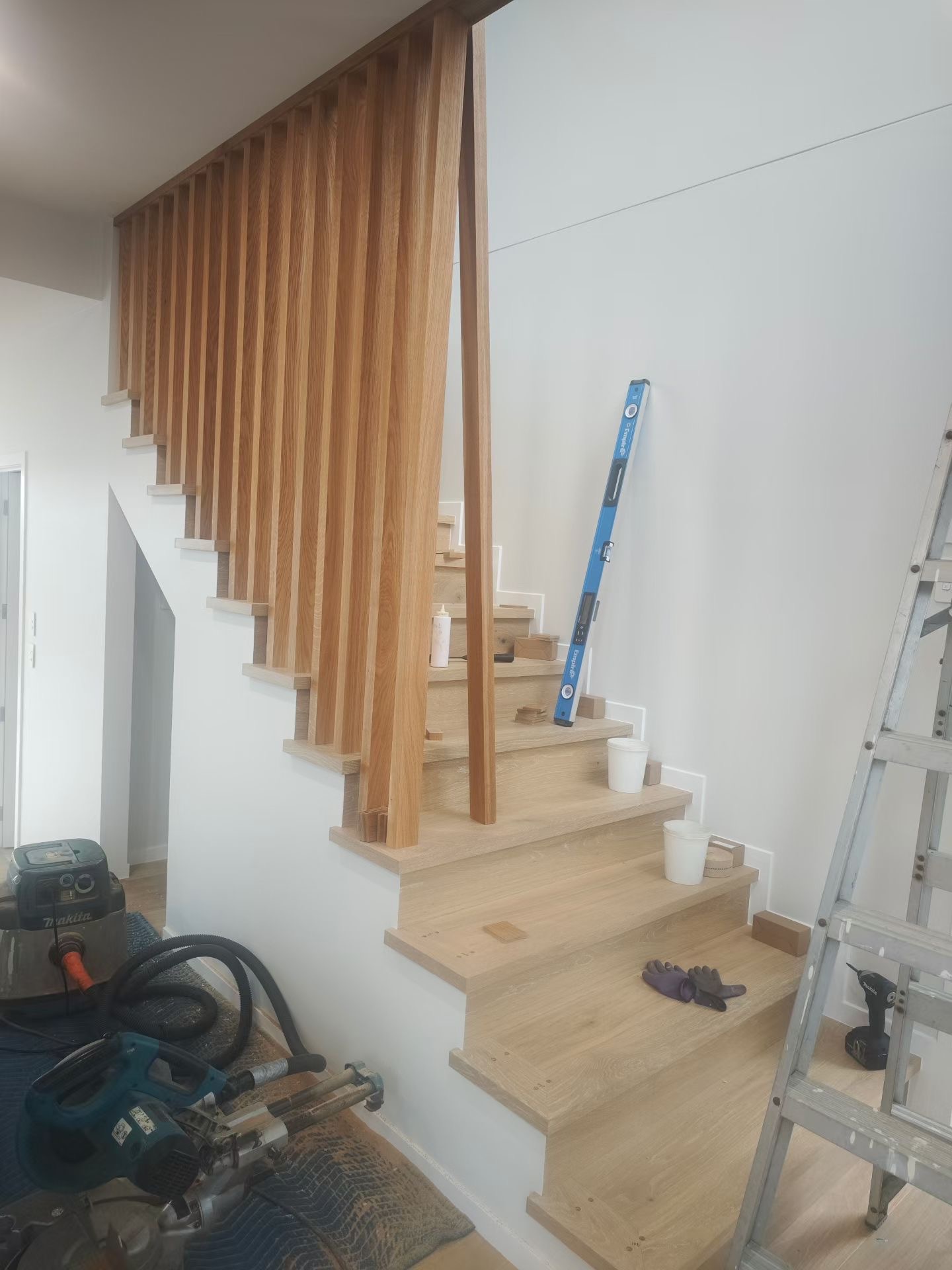
The stairwell application has become our most requested configuration. The slats run from the ground floor up through the stairwell, creating a visual connection between levels while meeting building code requirements for fall protection.
The Finished Product
Installed, the dividers filter natural light through the slats, creating patterns that shift throughout the day. They define space without dividing it — you get separation and openness at the same time.
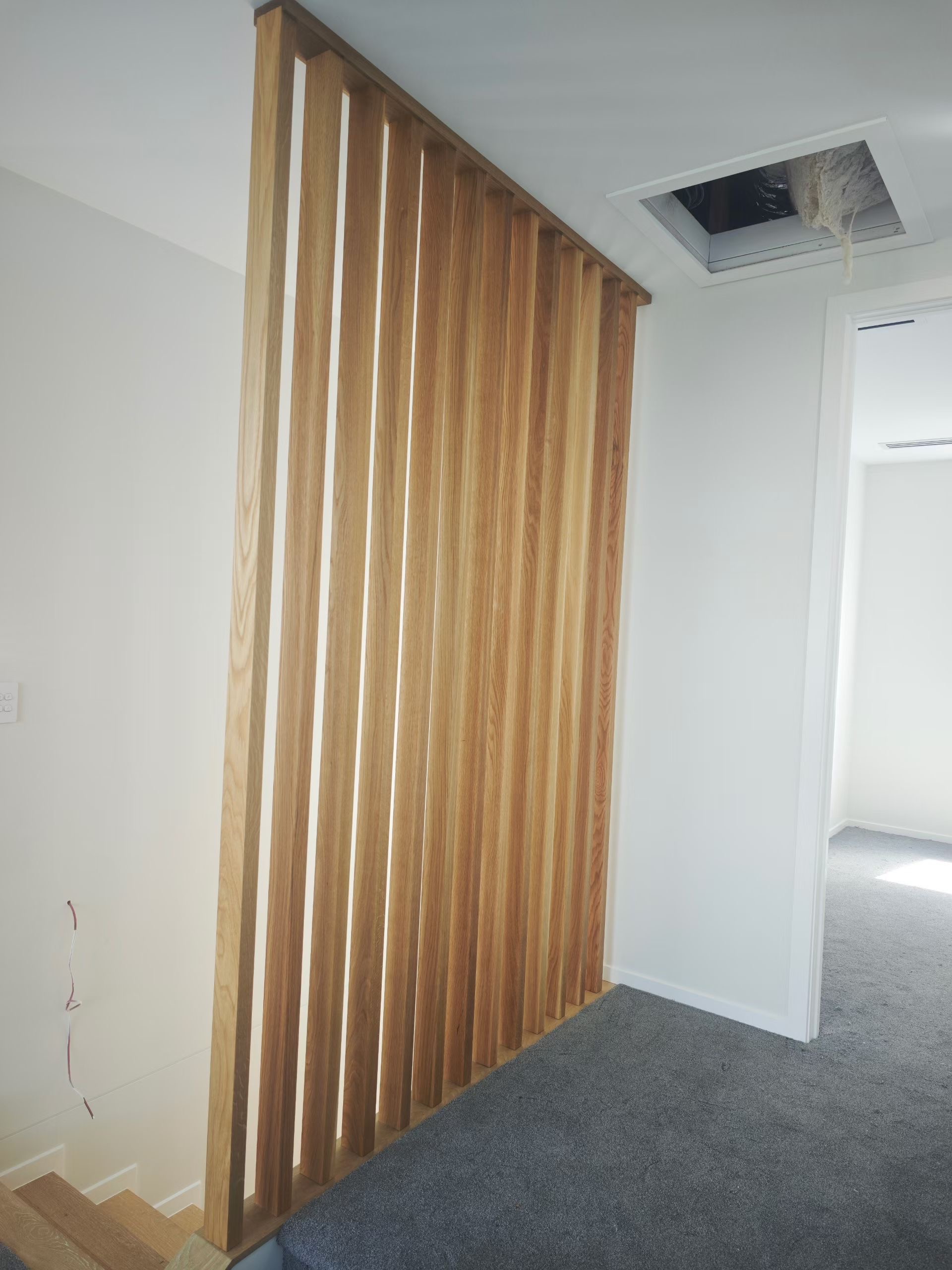
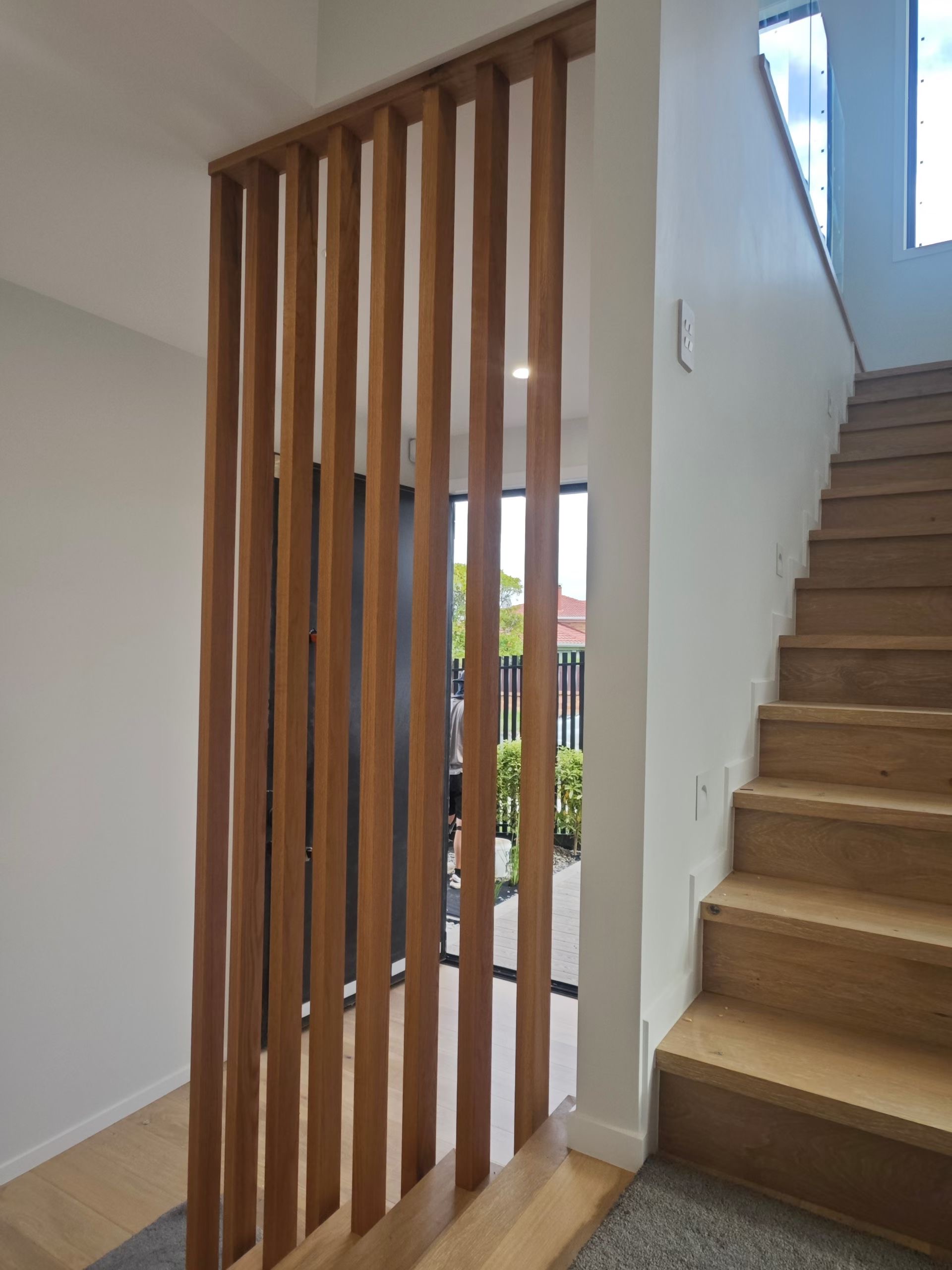
Every installation uses the same system, but no two look alike. The timber species, slat width, spacing, and height are all specified per project. We’ve built them in natural oak, dark-stained ash, and oiled walnut — each with its own character.
Specifications
| Detail | Specification |
|---|---|
| Timber | Solid oak, walnut, or ash |
| Slat Width | 40mm standard (30–60mm available) |
| Slat Depth | 40mm standard |
| Height | Floor-to-ceiling (custom) |
| Spacing | 35mm standard (custom available) |
| Mounting | Proprietary system (patent pending) |
| Finish | Hard-wax oil or polyurethane |
| Lead Time | 4–6 weeks from survey |
Want One?
We’re currently taking orders for residential and commercial timber slat dividers. The process starts with a site visit — get in touch and we’ll arrange a time.